Skip to content

17th century hose (fitted, very fitted)

Koláž punčochy

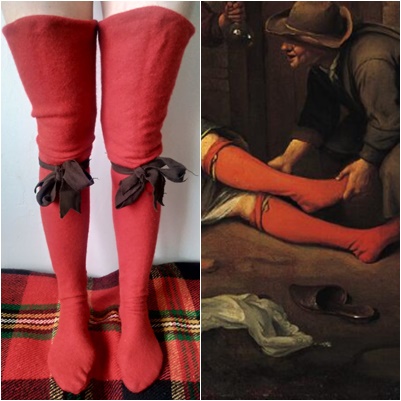
For a few years I have observed the fashion of increasing width of stockings between the reenactors. I was wondering why it is so hard to adapt this fluttering sail around the ankles to the curves of human feet. I myself admit, that since I have been interested in this hobby (since 2015) I have worn black knitted garter stockings under the skirt, which are somehow neutral and because of the relatively long skirt they are not very visible. This summer, I finally decided to sew my stockings for my "Thirty Years’ War" outfit. So not just because I needed them, but because I wanted to test how hard it is to fit stockings to the width of the legs.

What did I want to achieve?

Vrancx
VRANCX, Sebastian. January

Beautifully fitted stockings from Vrancx, a feast for my eyes.

De Gheyn
DE GHEYN II, Jacques. Plate 22, in Wapenhandelinghe van Roers Musquetten Ende Spiessen (The Exercise of Arms)

Pikeman from De Gheyn. A soldier sliding his right hand along the training-pike, from the Lansquenets series, Jacques de Gheyn II.

Preserved stockings with visible ankle gusset + foot + the part overlapping the rest of the leg – these linen ones are lace-ups, which I believe somewhat simplifies the problem of shaping around the ankle (hope I'll try with a lace-up gusset soon).
Step by step

RH

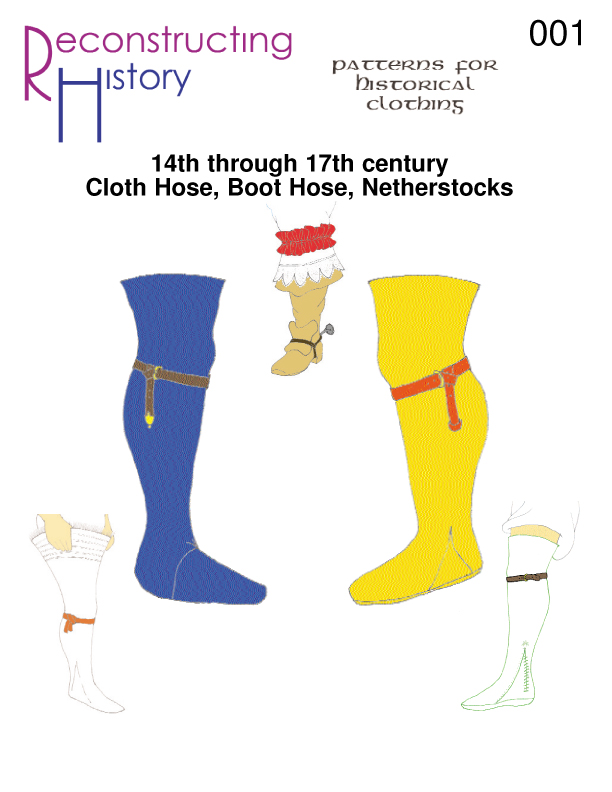
Po několika zkušenostech s texty ze stránek Reconstructing History jsem se rozhodla koupit pro dodatečné nastudování punčoch jejich střih/návod. Na těchto stránkách jsem kdysi pořídila on-line stažení různých textů a pár střihů, každý střih má doprovodný text s užitečnými radami. Pro mé začátky to byla skvělá pomoc a z předchozích zkušeností vím, že mi v konstrukci některých kostýmů napomohly právě doprovodné texty, které poradí kde, co a jak zabrat/upravit a jaké fígle použít, aby vám kostým dobře padnul. Většinou opravdu pomohl text více než přiložený střih.

(I even decided to buy this one and have it shipped, which turned out to be unnecessary because the shipment looks exactly like what you print at home and you pay unnecessary postage. Although the first page is colored and you don't have to stick to the pattern, you have to go to the customs post office and pay unnecessary postage. If you want to order something from Reconstructing History online version is enough.)

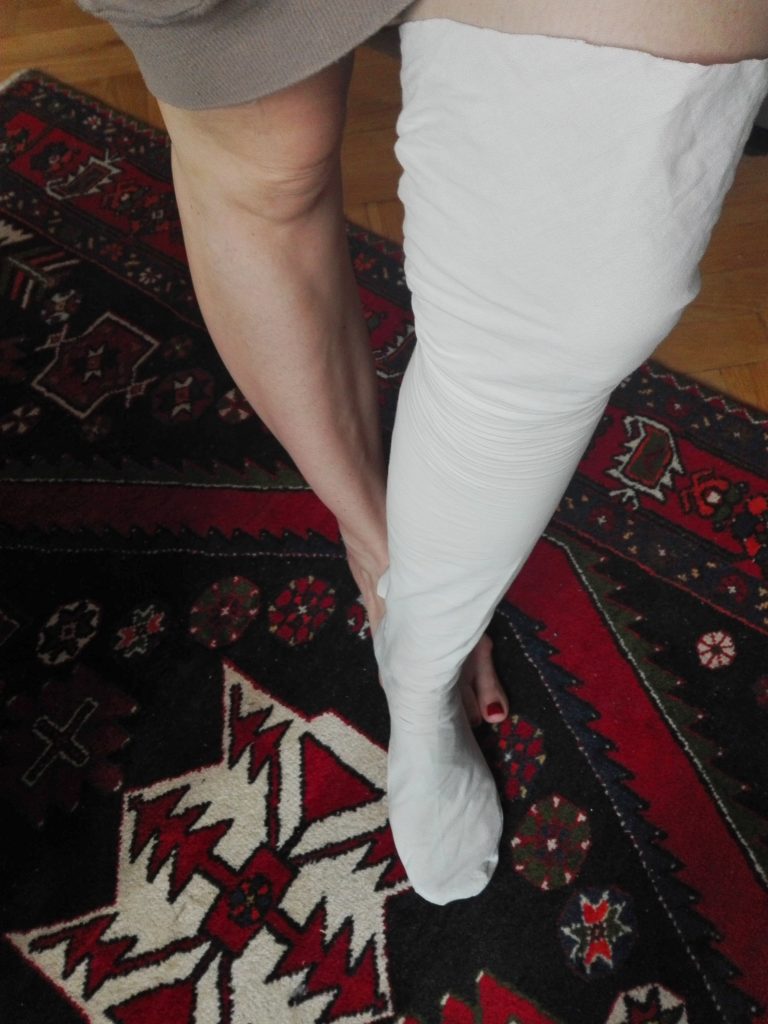
First of all, I decided to try to create an "ideal" pattern fitting on my leg from some old cloth. Never throw away old sheets, there are never enough of them. I remembered right from the start that a cotton sheet would never be as elastic as the wool from which I´ll make the final stocking. Even when I achieve elasticity by cutting at 45 degree angle cotton will never stretch so much. So I knew that I would definitely tighten and smooth the woolen stocking a little bit, but as an ideal pattern, cotton served well. I made a „tailor-made“stocking and I can (hopefully) use it my whole life - provided my calves or ankles do not get fat. :)

Punčocha
Punčocha
Punčocha
Punčocha

Toto byl výsledek onoho ideálního střihu - to byla jedna z těch „nejnáročnějších“ fází. To nejnáročnější bylo vlastně to, že jsem si musela punčochu neustále navlékat, svlékat, upravovat, navlékat, svlékat, upravovat, navlékat… Takže to není moc o tom jak jste šikovní v šití, spíše o výdrži. A není to taky tak úplně jednoduché, když vám doma leze mimino a tahá vám za druhý konec punčochy. 🙂


When sewing this pattern, I proceeded as follows:

Střih punčocha

This was followed by sewing a hose from wool. I first tore my cotton pattern and cut it out of a woolen cloth at an angle of 45 degrees.

Punčocha
Punčocha

Následovalo dilema ohledně způsobu šití – strojové versus ruční. Zprvu jsem chtěla mít punčochy šité ručně – krom toho, že mým záměrem je vždy docílit co největší historické přesnosti, jsem také chtěla docílit co největší elasticity, což ruční šití poskytuje. Jenže, sešít punčochu v ruce přeci jen trvá déle než na stroji a jelikož jsem věděla, že budu výslednou punčochu ještě někde dotahovat, nechtělo se mi případně párat a přešívat ruční šev. Nakonec jsem se rozhodla pro kompromis: punčochu jsem až do výsledného ideálního tvaru sešila na stroji a na závěr vše přešila ručním švem a odpárala šev strojový. Co mě překvapilo, bylo to, že punčocha na první dobrou byla akorát, hned po prvním zkompletování mi bez žádných úprav padla perfektně, což skvěle potvrzuje, že zkušební střih z bavlny může znamenitě posloužit. Jenže, paradoxně už během pár vyzkoušení se začaly trochu vytahovat a tak jsem je stejně párkrát utahovala (je mi tedy jasné, že se časem trochu vytahají, jako všechny mé vlněné kostýmy).

However, when altering the machine seam, I encountered an unexpected problem - hand seam, although it was a recommended historical seam according to Reconstructing history, the double linen blacksmith thread ripped. I don´t understand this hurdle - the seam ripped at the calf, not at the ankle. I tried to stitch the stocking twice with a running stitch with double linen thread and the result ripped. This point of my research will remain a mystery to me. The hand seam was supposed to provide inherent stretch and the linen thread is stronger than the cotton one from the machine, with which I firstly sewed the stocking. The only possible explanation seemed to be the problem of flexibility, which the sewing machine provides and the hand must achieve a similar effect in some other way, or I cannot explain how it is possible that the ordinary machine stitch did not rip during several tries and the double linen thread did. For the third time I tried the second recommended stitch from the manual, and that was the back stitch. In my new try (because I wanted to be sure - or maybe just for experiment sake?) after each individual stitch I stretched the fabric to be sure that with new seam I will get some stretch and then continued. I don´t really know what helped, but the back stitch stretched really great and the stocking did not break.

Punčocha

The question is whether to wrap the edges of the wave that I have left free. I think time will tell me if it will be needed.

Punčochy
Punčocha
Punčocha

I chose the worst weather for sewing. It was really hot for me to keep trying on my stocking, because that's what it's all about - trying and tightening on the leg until it's exactly what you wanted. For beautifully fitted calves, you actually only need a little patience and stamina. I really put on a very narrow stocking in 34+ degrees about 30 times on my leg.

To make matters worse, I finished the stockings in the second trimester of pregnancy, when there was no danger of swelling of the legs, but testing with the belly was no longer very comfortable. I will definitely wait a few months to wear them now, so that someone doesn't have to cut them off my feet in the afternoon swelling…

What did I use?

What will I do differently next time?

Highlights:

Tags:

1 thought on “První pokus o punčochy (uplé, velmi uplé…)”

  1. Když jsem šil ty své vlněné…
    1. při testovacím kousku (taky z vlny) jsem použil následující steh (nevím jak se jmenuje,takže popíši) – přeložil jsem dva kusy přes sebe (ne ____//___, ale __==—) a šil jsem jakože spirálu – a neutahoval. Ukázalo se, že to byla správná volba, protože po pár nošeních, zvlhnutích a sušeních se daný šev zaplstil a přitom zůstal pružný.
    2. A to je vlastně odpověď i na „Otázkou zůstává, zda zalemovat okraje třepící se vlny, které jsem zatím nechala volně. Myslím, že čas ukáže, zda to bude zapotřebí.“

Leave a Reply

Your email address will not be published. Required fields are marked *

error: Content is protected !!