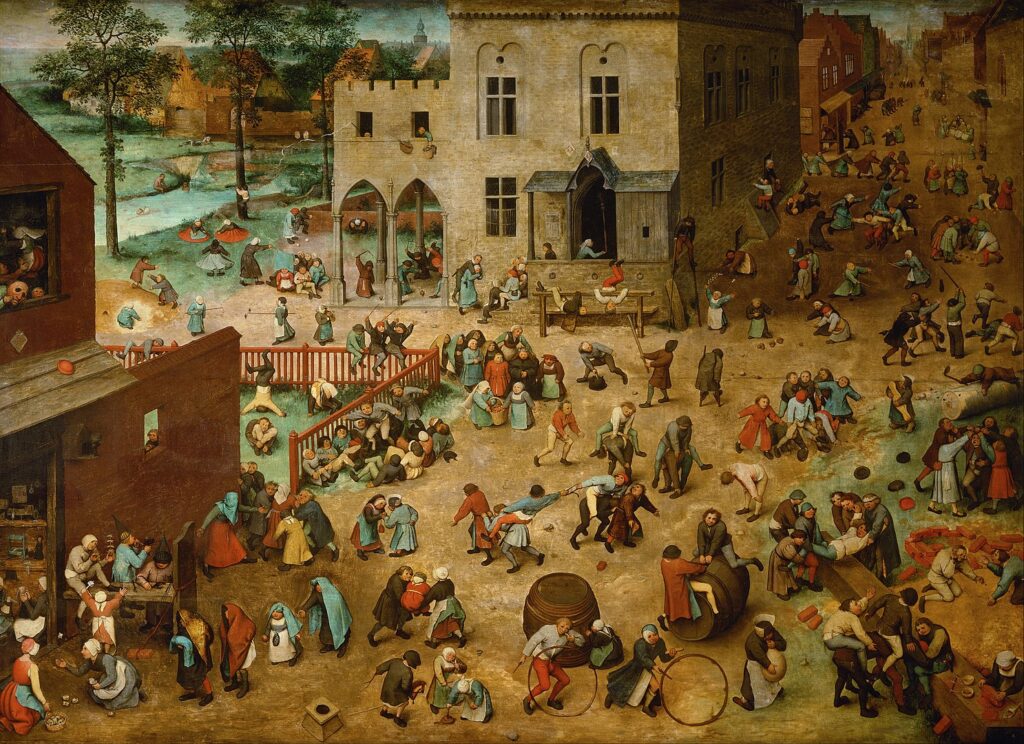
BRUEGEL, Pieter the Elder. Children´s games
Ibid.
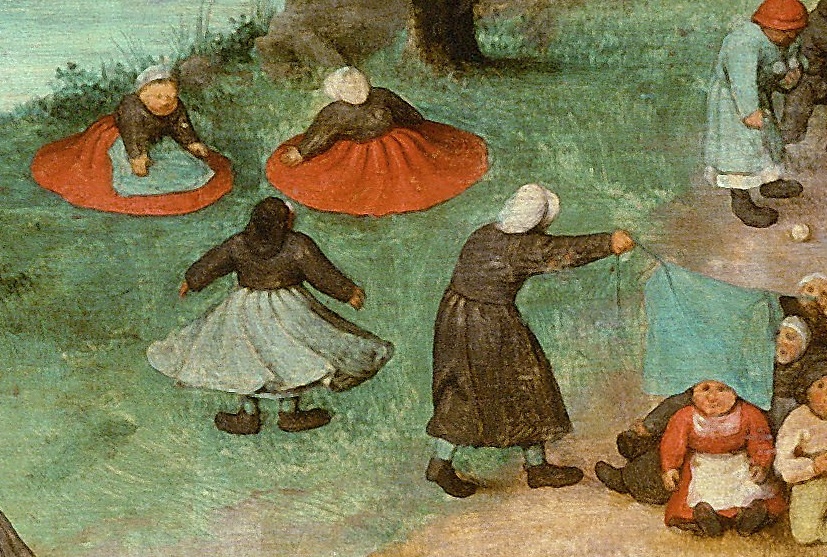
Detail of Bruegel's girls. Preschool children in skirts and dresses/coats. We can see details of coifs and caps, aprons of various colors, and partlets (white cloths covering the chest, resembling bibs, worn by the girl in the red dress at the bottom right). Leather shoes reveal multicolored stockings here and there.
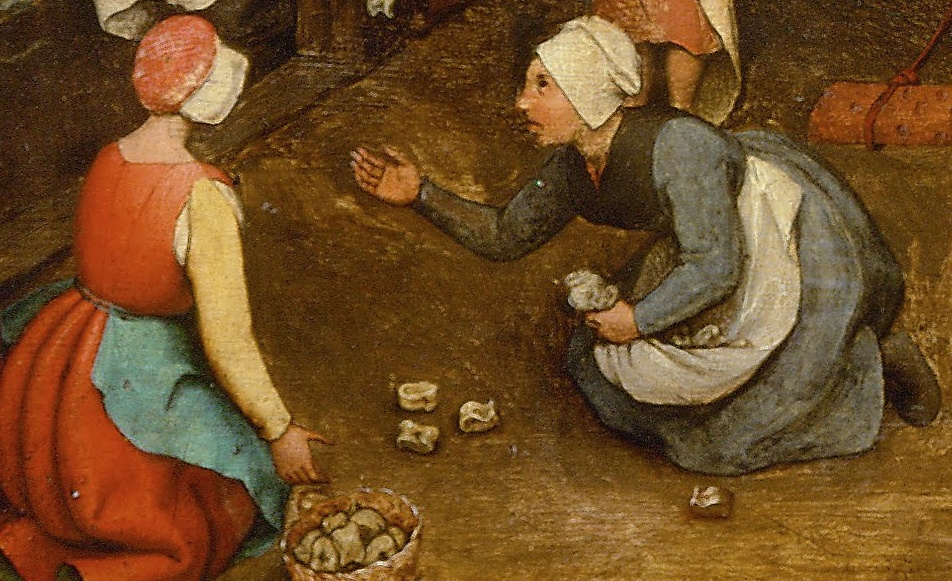
Ibid.
In the next detail, we see girls in dresses with slightly shaped bodices. They wear white coifs, and the girl on the left has a red head covering. Her red dress has removable sleeves that are pinned to her shoulders. A practical blue apron covers the front of her dress. The girl in the gray dress has a dark partlet on her chest and a similar apron in white.
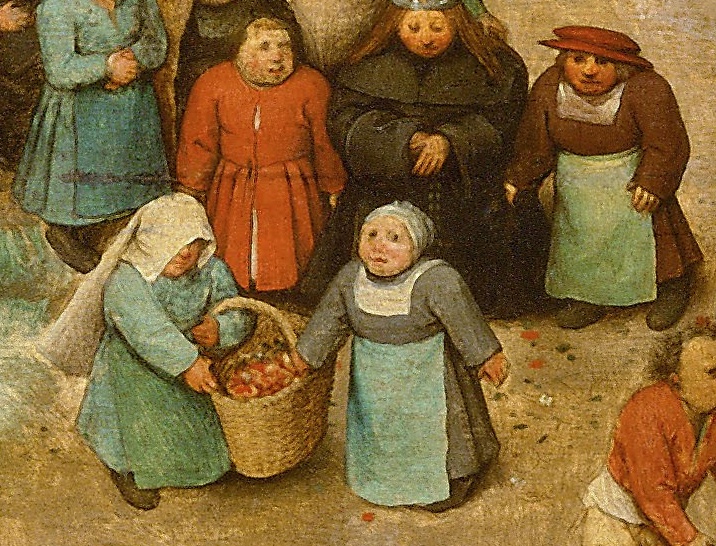
Ibid.
In this detail, we see girls in dresses (coats) with aprons and leather shoes, and again we see partlets/bibs and coifs—the girl on the left has her coif apparently untied, so it is a different type of head covering (the back part of the scarf hangs down her back, they're probably just not tied around the head). Knitted baskets have been a staple since time immemorial (I absolutely love accessories like this.).
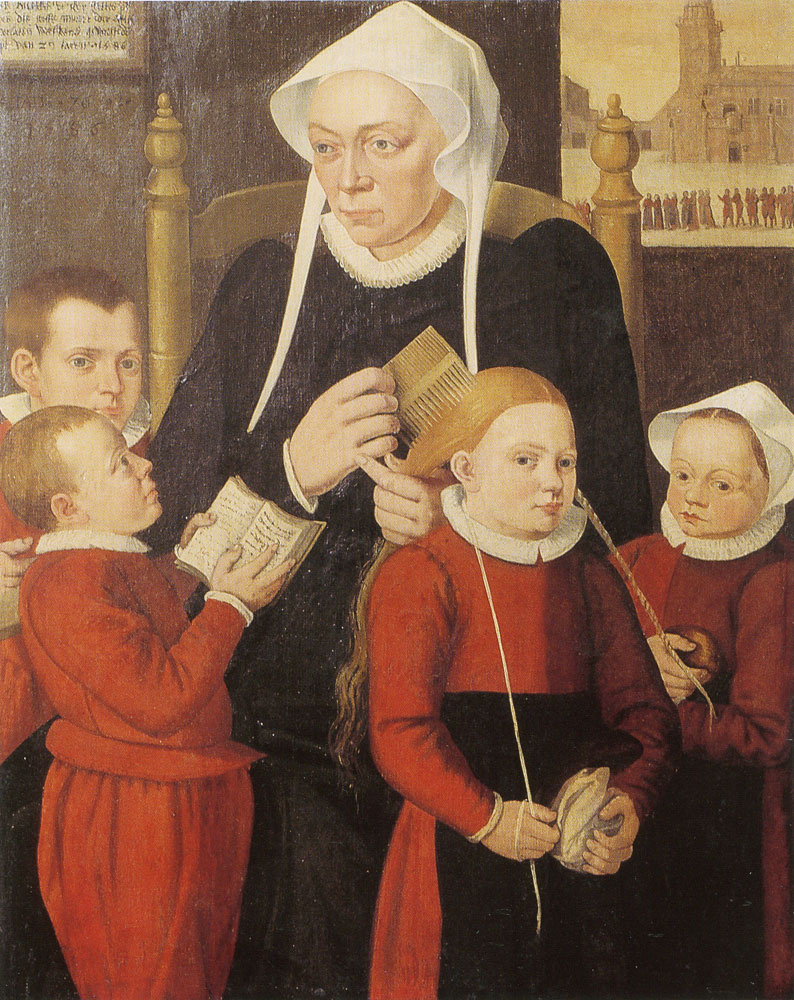
.jpg%20)
BRUEGEL, Pieter the Elder. The Hay Harvest
Detail from the painting The Hay Harvest by Pieter Bruegel the Elder, which can now be found in the Lobkowicz Palace at Prague Castle. In the famous depiction, we see young girls in dresses (kirtles), of medium length, about calf-length. Shorter lengths are generally most often depicted for working women. We also see white shirts with long sleeves, which served a multi-purpose purpose as a shirt, petticoat, nightgown and underwear. We see leather shoes on their feet and head covering on their heads. The girl or woman, with her back turned, has a basket, detachable sleeves and a blue apron for work with hanging edges.
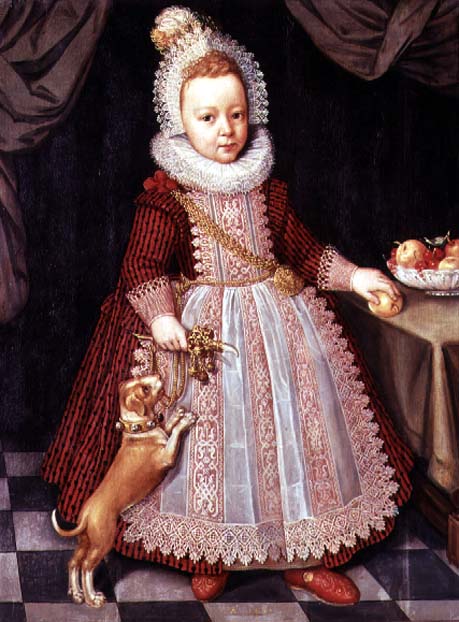
SOMER, Paulus van. A Child with a Rattle
From the upper classes, we see these clothes in a pompous design worthy of their status - a dress/coat made of more expensive fabric and with more elaborate details and decorations. The apron is decorative and reaches to the neck - this upper part of the covering (longer aprons) can be seen in many children's clothes regardless of the status. The little girl has a decorative coif and cuffs, on her feet low, decorative slip-on shoes resembling fashionable shoes that were also worn by adults. She holds a rattle in her hand - a very common detail in paintings with children of toddler and preschool age.
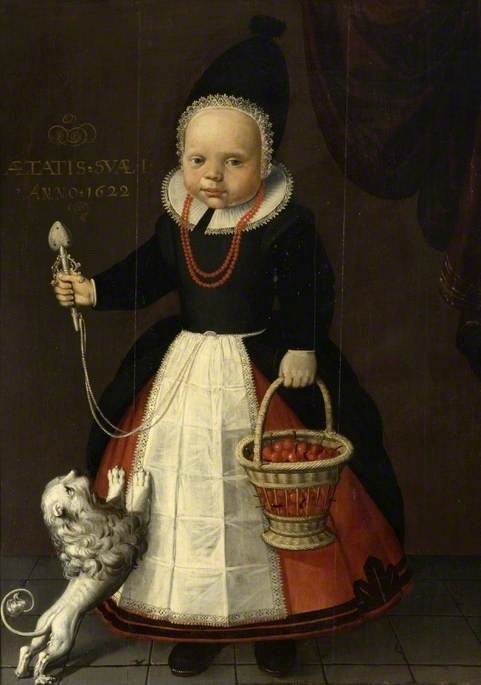
Dutch (Friesland) School. Portrait of a Girl, Aged One, with a Basket of Strawberries
Another girl in a long-sleeved dress/cloak. Underneath the dress, you can see a decorative petticoat, a decorative apron, and a cap with a decorative rim, or rather a cap worn over a decorative coif. The girl has a basket of strawberries, a rattle, black shoes on her feet, and red beads around her neck. These beads, along with rattles, are also often depicted in portraits of children, and according to Veronika Pilná, these "strings of red beads" are probably decorations made of sea corals, which were supposed to change color if the child fell ill. This description is found in the publication Clothing in West Bohemia 15th - 17th century (p. 112), and we can see that this was a detail common across European countries. Pilná states on the same page that even such small children wore lace collars and decorations on festive occasions. She also assumes, based on iconography, that children of the same sex were given identical clothing (p. 113), as evidenced by abundant foreign and domestic iconography. "From the age when they stopped wearing toddler skirts, boys and girls had clothing made identically down to the last detail..." she states.
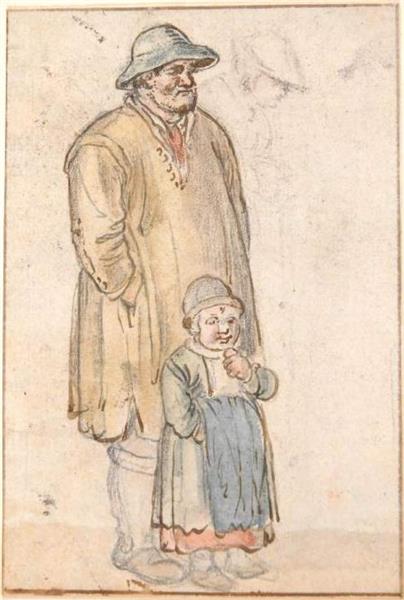
AVERCAMP, Hendrick. Study of a Standing Man and Child
Depiction of a poor girl, again in practical clothing (dress/coat) with an apron, low shoes, and a warm cap on her head. A petticoat can be seen under her dress.
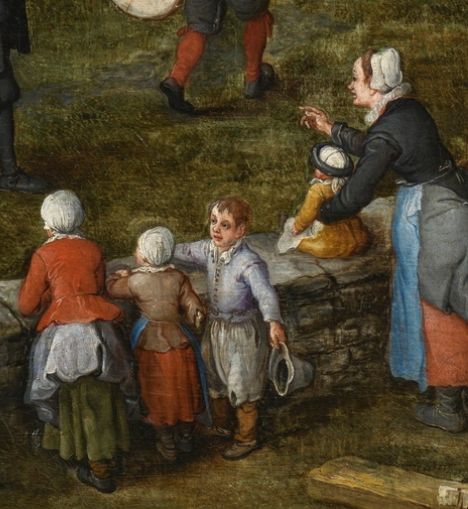
BRUEGHEL, Jan the Elder. Country Wedding
Detail of girls dressed like their mother in skirt, waistcoat, petticoat, coif, and low leather shoes. One blue apron and warmer stockings can be seen. The girl (boy?) sitting on the wall also has a cap.
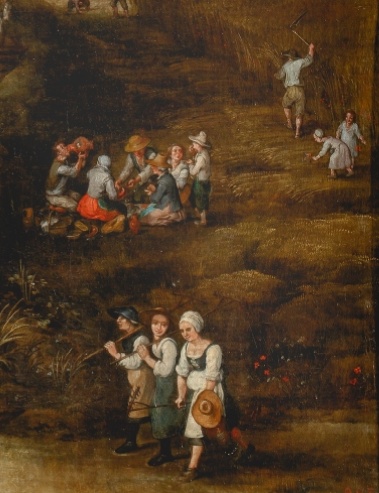
BRUEGHEL, Jan the Elder. Country Life
Detail from Bruegel's painting containing, among other things, the same characters as in The Hay Harvest, but here with children playing in the grass wearing only shirts – the girl has a long shirt, coif, and shoes modeled after the older girls and women in the painting.
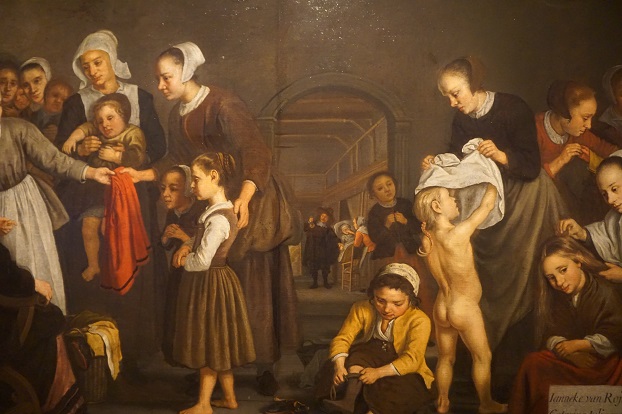
VICTORS, Jan. Het kleden der wezen
In the painting Dressing the Orphans, we see a girl in a brown dress (kirtle), a white long-sleeved shirt, and her hair traditionally braided in the hair taping style. The dress is practically shorter. The girl in the yellow waistcoat is putting on brown stockings and we can also see her white shirt and the detail of her lacing. She is holding laces in her hand, which she will probably use to tie her stockings below the knee, and she is wearing a white coif on her head. A naked girl is putting on a white shirt while a girl in a coat, skirt, and also a white shirt watches her from behind. The girl in the right corner is probably also having her hair braided in the traditional taping hair style and is dressed similarly.
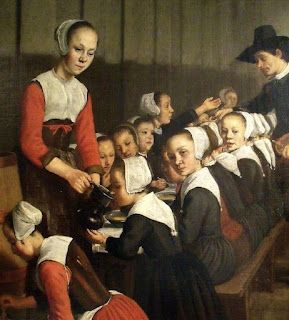
VICTORS, Jan. Feeding the Orphans
Slightly older girls can be seen in the painting Feeding the Orphans, where almost all of them are wearing black dresses with long sleeves, white coifs, and scarves over their shoulders. White shirts and partlets are also visible. In all of these paintings, we see the fashion of gathered skirts, and it is clear that young girls were already dressing in the style of older, adult women. My favorite detail in this painting is the decorations hanging from the corners of the scarves—the tassels.
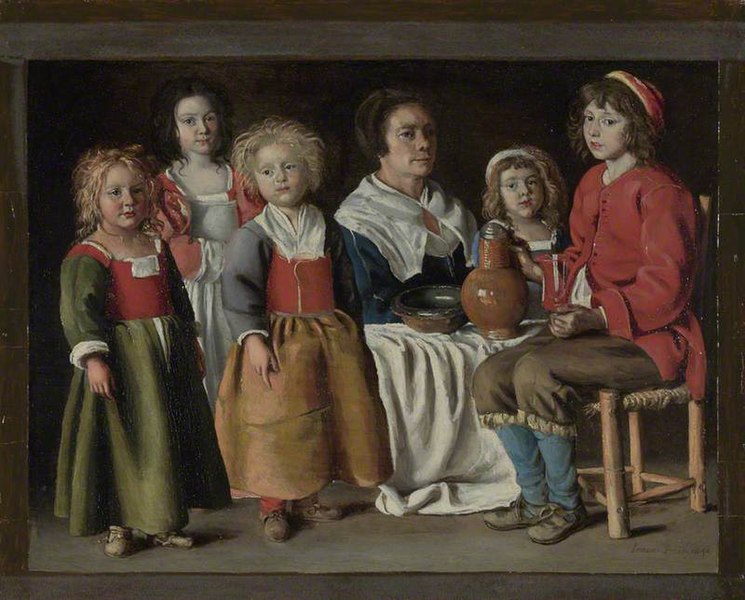
LE NAIN brothers. A Woman and Five Chlidren
A Woman and Five Children by the Le Nain brothers, who often depicted the poorer classes and large families. Although it is not clear from the painting whether the figures in dresses are girls or boys, given the gender-neutral style of clothing at the time, it is clear that the dresses resemble adult clothing. We can see that the children wore long white shirts, skirts, and bodices in various colors. The bodices are sewn from different colored pieces, presumably to save fabric and use up scraps. This is also documented for adults, whether for reasons of saving fabric or color fashion. The bodices are sewn with closures in places other than the chest – it is not clear whether on the sides or at the back. We see a classic skirt slit below the navel, a white shirt underneath, and low-heeled leather shoes with laces. There are also accessories – white scarves, stockings, and one figure has a kind of white headband around her head, probably a linen scarf that has been rolled up or otherwise shaped from some kind of cap. The figure on the far left has a scarf sticking out from behind her neckline, so it may just be tucked behind her neckline and serving as a bib.
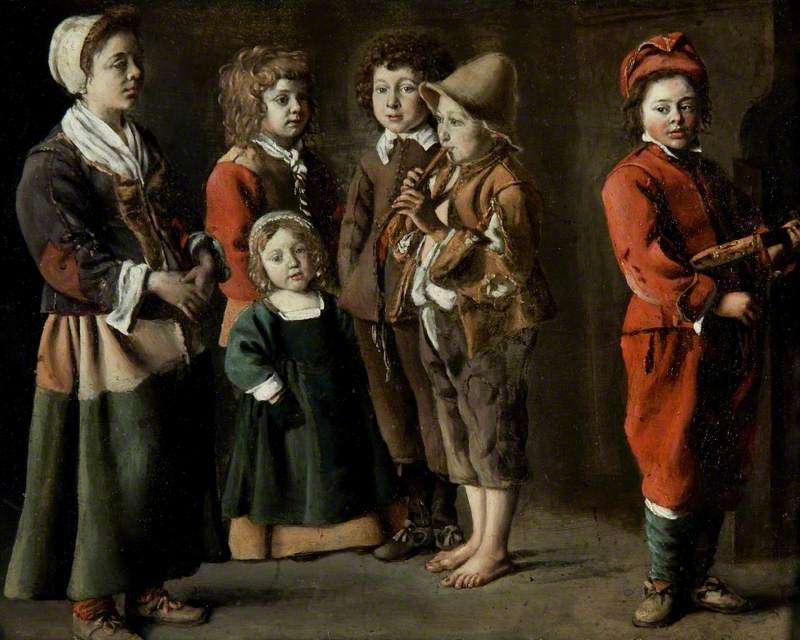
LE NAIN, Antoine. Peasant Children
In one of Antoine Le Nain's other paintings, we find a nice detail in the patched clothing of the girl on the left—her skirt has been repaired or sewn from several pieces of fabric, and her coat sleeve has a patch on the elbow. Otherwise, her clothing is similar in style to that described above. We also see a smaller child in a dress apparently sewn from a single color of fabric (perhaps there was enough single-color fabric left over for such a small figure, as was the case with our toddlers).
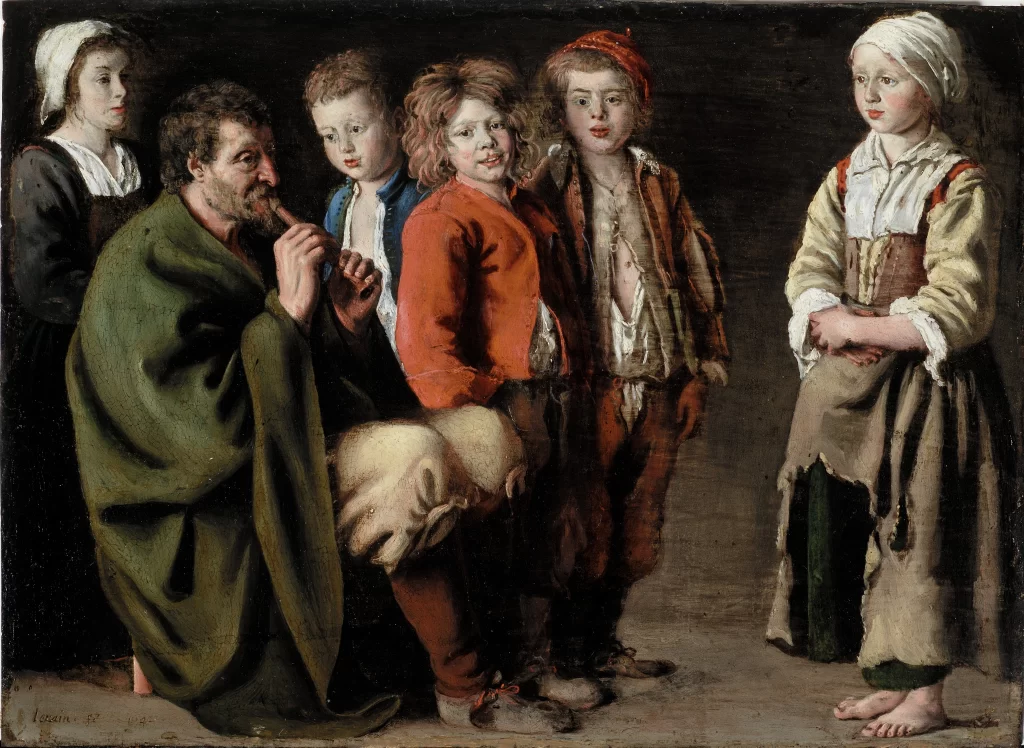
LE NAIN brothers. The Villager Piper
The painting with children and a street artist, again by the Le Nain brothers, depicts a genre scene in which poor children are dressed like adults. Two girls are wearing head coverings – a coif and a scarf wrapped around the head – and both are wearing kirtles (dresses with bodices). The barefoot girl on the right shows a white shirt, a tattered piece of clothing, but with a clear pattern – a bodice with a skirt and sleeves made of fabrics of different colors: the skirt is beige/light brown, the bodice is also brown, the bodice straps are red, and the sleeves are yellow/beige. Under the skirt is a dark-colored petticoat and a white shirt. A partlet protects the front of the girl's chest. The girl in the shadows reveals only the upper part of her dress – a bodice with sleeves, again in different colors, and a white shirt.
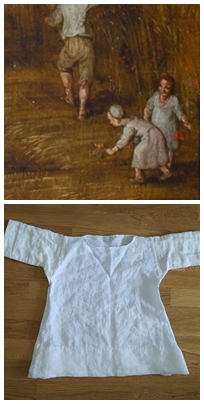
I sewed/cut several copies of the shirt for the girl so that she would have something to change into if she fell into a puddle, got wet, or had some other wet accident.
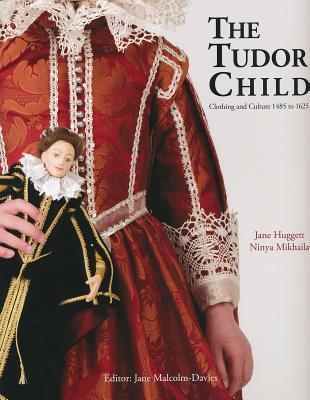
As with the boys' version, I again drew inspiration from my favorite publication, The Tudor Child: Clothing and Culture 1485 to 1625. The pattern is very simple and can also be used for adults. I chose the simplest option possible, as this will make it easier to adjust in the coming years. In other words, the shirt is designed to grow, not only in terms of the sleeves and overall length, but also in terms of the circumference and shoulder seams, which I will try to describe later in a separate post.

I also used instructions for sewing on details from the publication Seventeenth Century Women's Dress Patterns, which describes the process of sewing on individual parts of the shirt based on preserved examples.
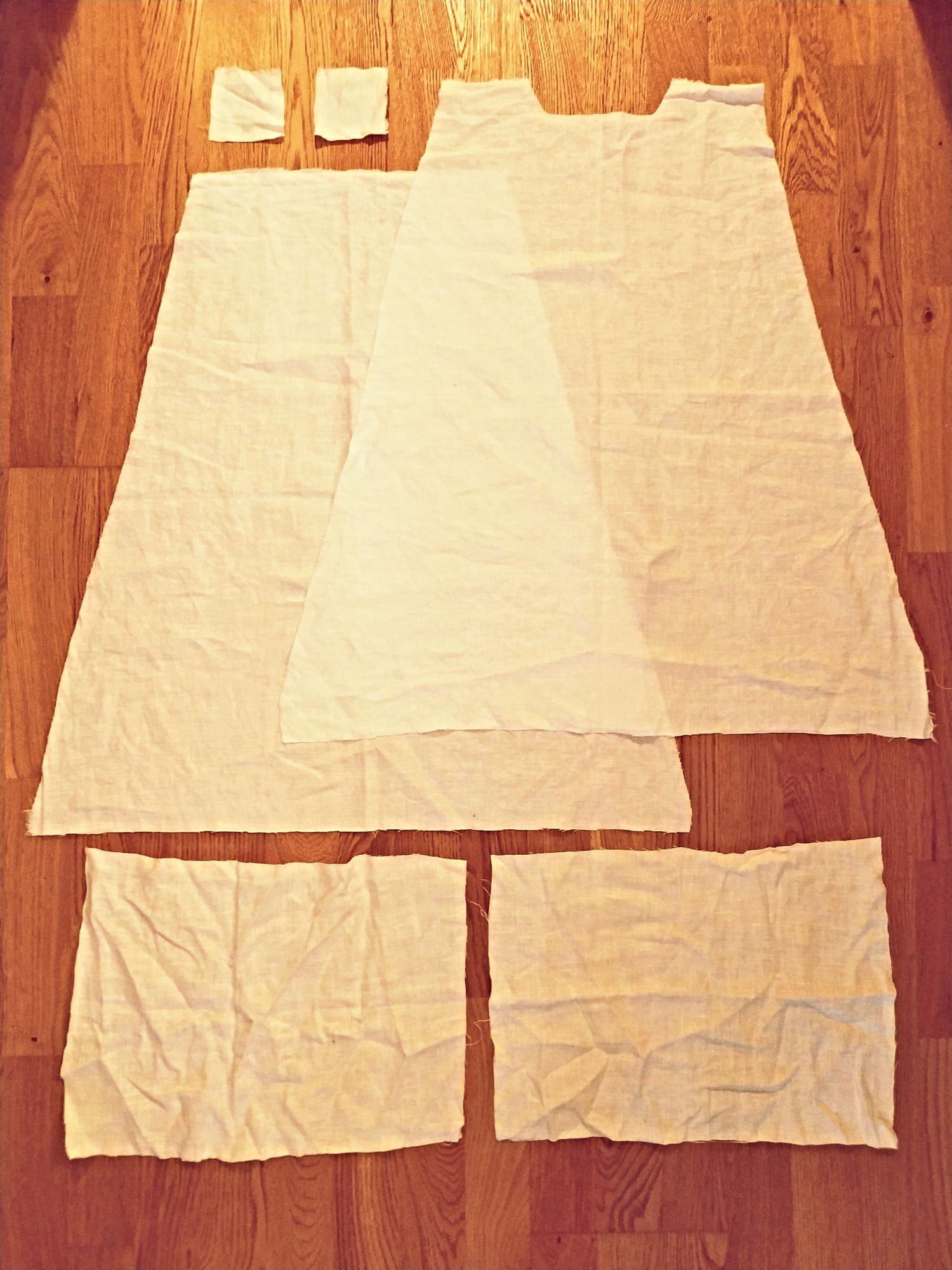
The pattern consists of two main panels – rhombuses, one of which has a neckline, two rectangles – sleeves, and two squares – underarm gussets. According to the publication, this particular pattern is suitable for the period from 1485 to 1625 for all social classes, with the difference that for the lower class, it is necessary to pay attention to the simplicity of the decoration, i.e., it is appropriate to omit ruffles, flounces, and cuffs.
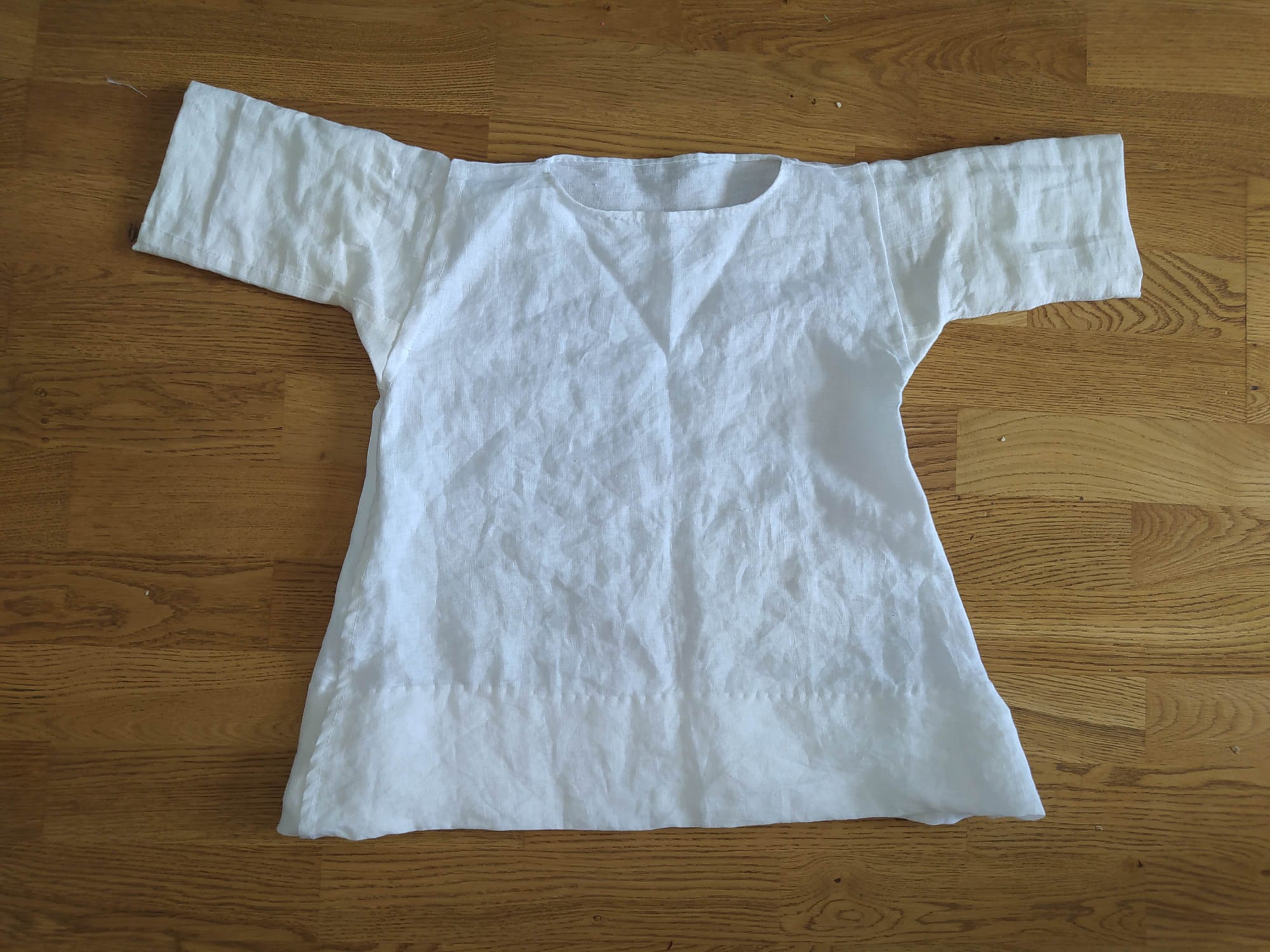
The shirt has a simple neckline and straight sleeves. For smaller children, less decorative shirts with the option of lengthening are more worthwhile, so I made the sleeves with almost 20 cm of extra fabric, as well as the overall length of the shirt.
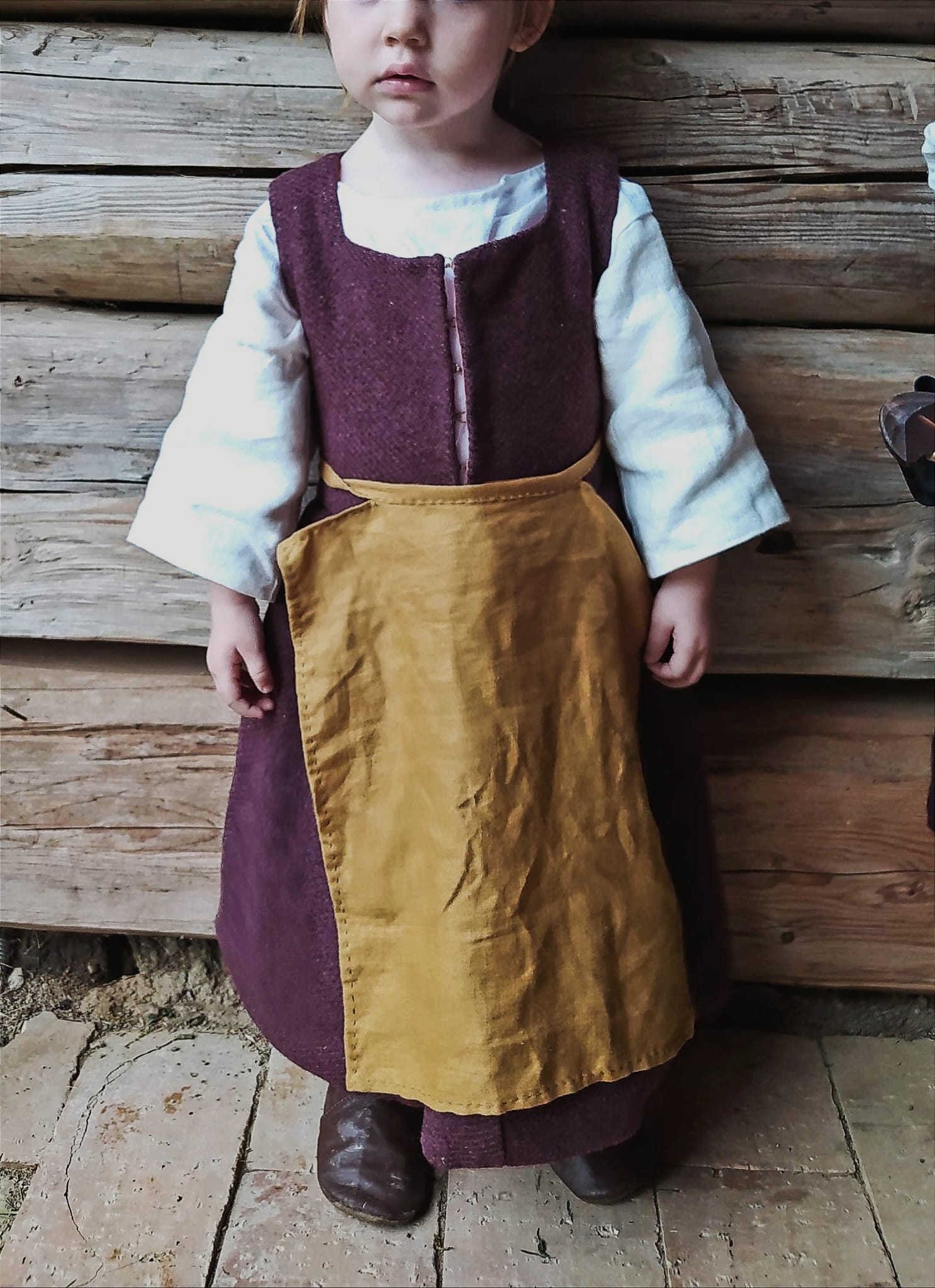
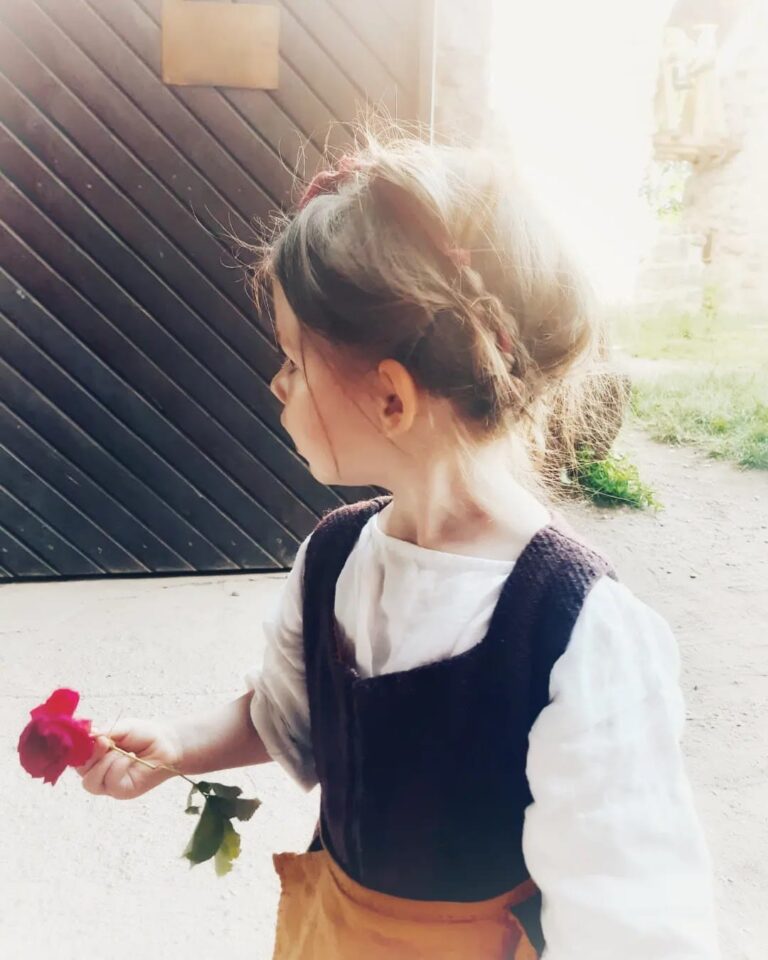
Our little village girl in the open-air museum in Vysoký Chlumec.
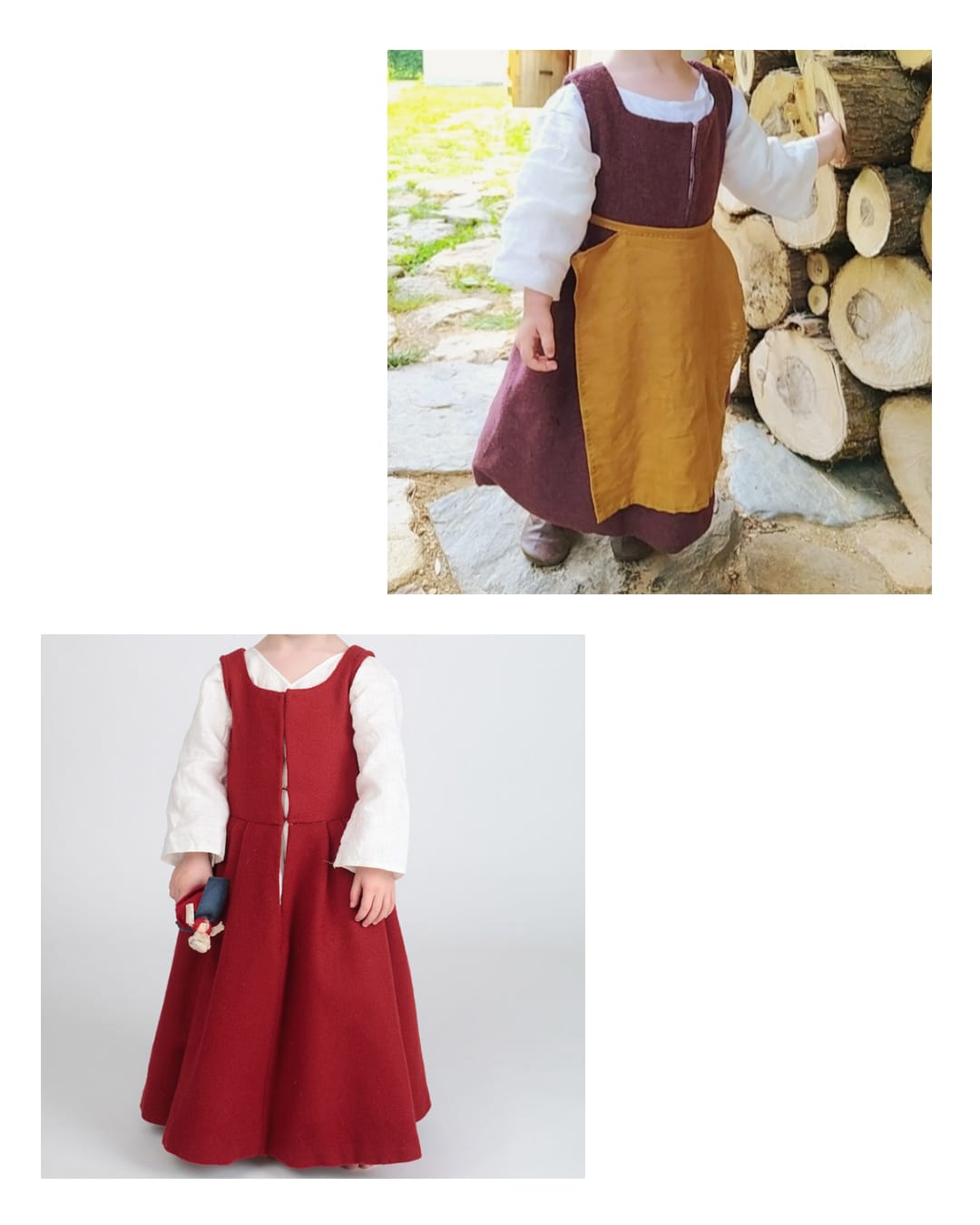
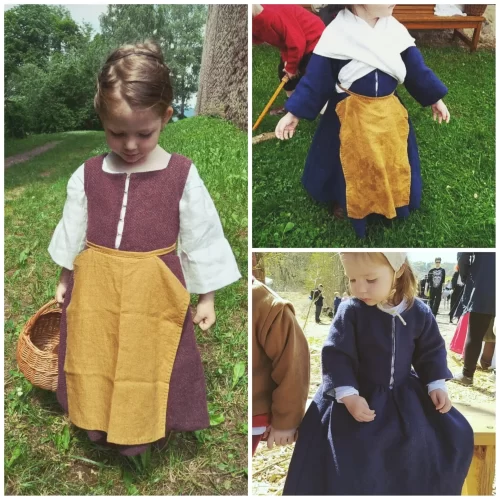
I sewed the dress, so called kirtle, inspired by the girls from Bruegel's Children's games mentioned above, and I drew the pattern again from the publication The Tudor Child: Clothing and Culture 1485 to 1625. The picture above shows our woolen dresses in colors chosen by my daughter, and below is the model from the publication – Bruegel's little girl and a kirtle sewn by historical costume designer Nina Mikhaila, who is the co-author of The Tudor Tailor book series.
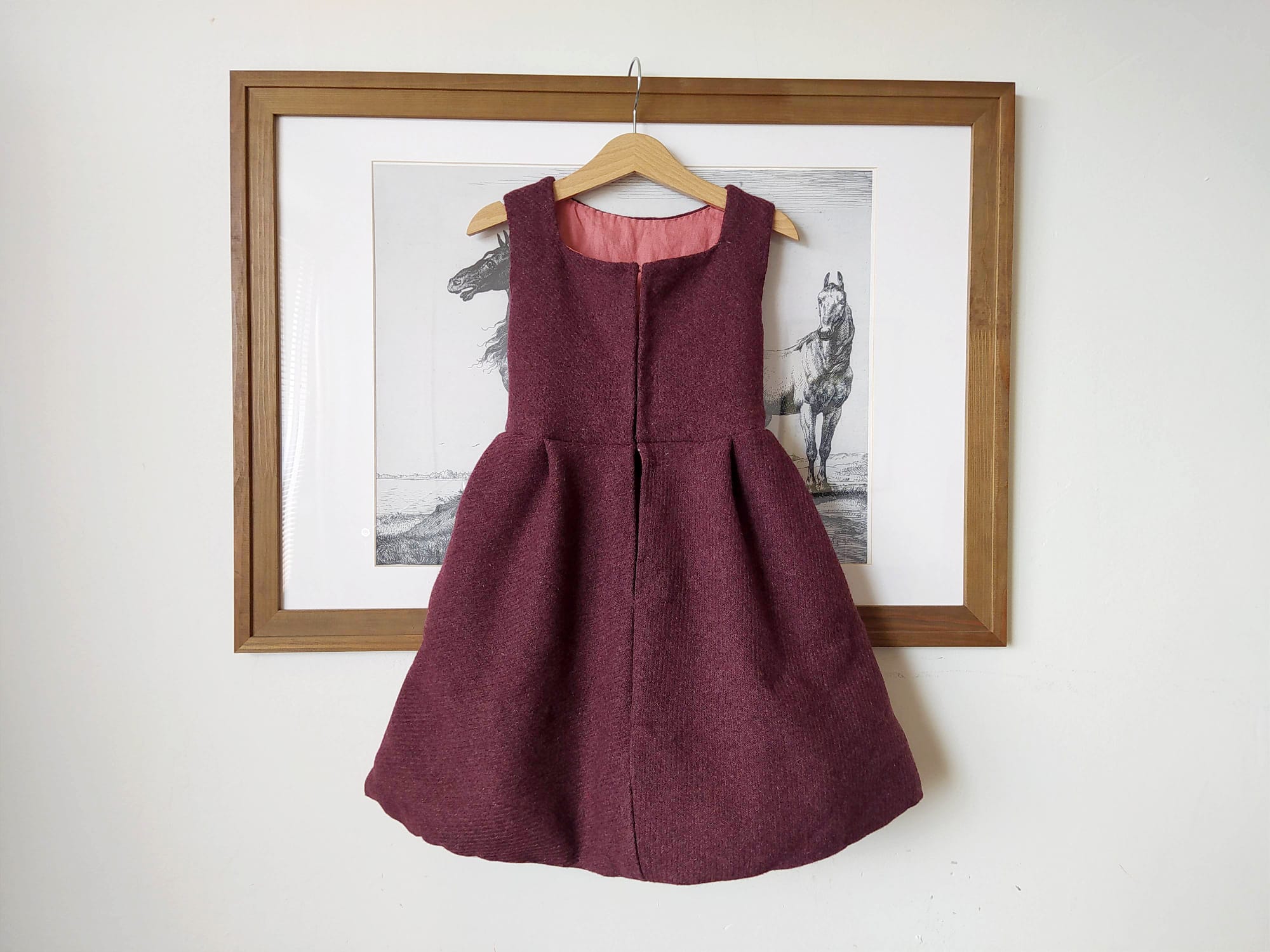
The little kirtle is made of very comfortable wool, which I bought as leftover material in Belgrade by the kilo. Since my daughter really liked this color, I had to figure out how to make do with the fabric and still create a growing costume. In the end, this was reflected in the waist, where the skirt is not too gathered, so it did not need to be very wide. However, the result is faithful to the models from the publication and Bruegel's girls.
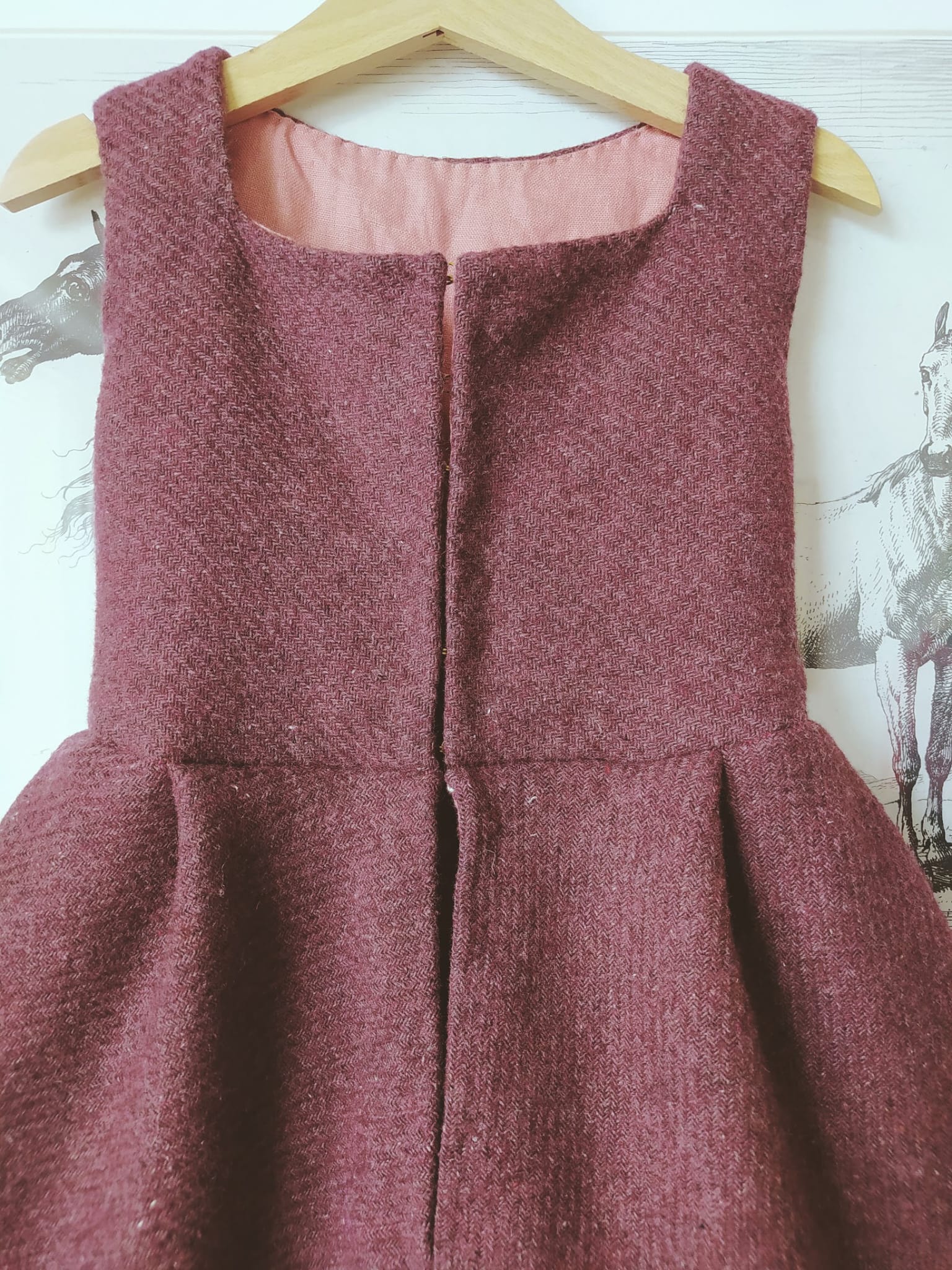
The linen lining is, of course, pink, as requested by my daughter.
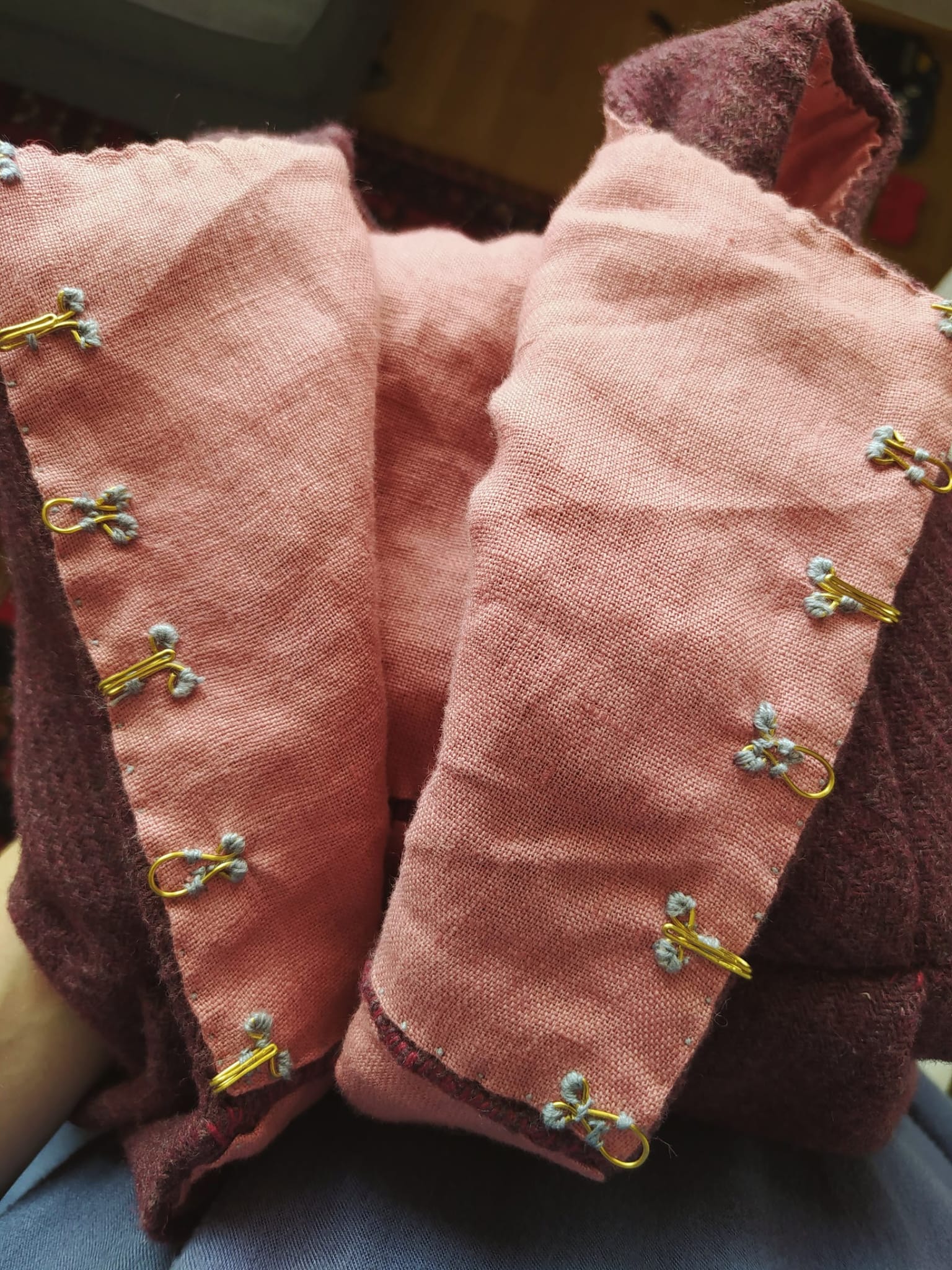
The kirtle fastens with brass hooks.
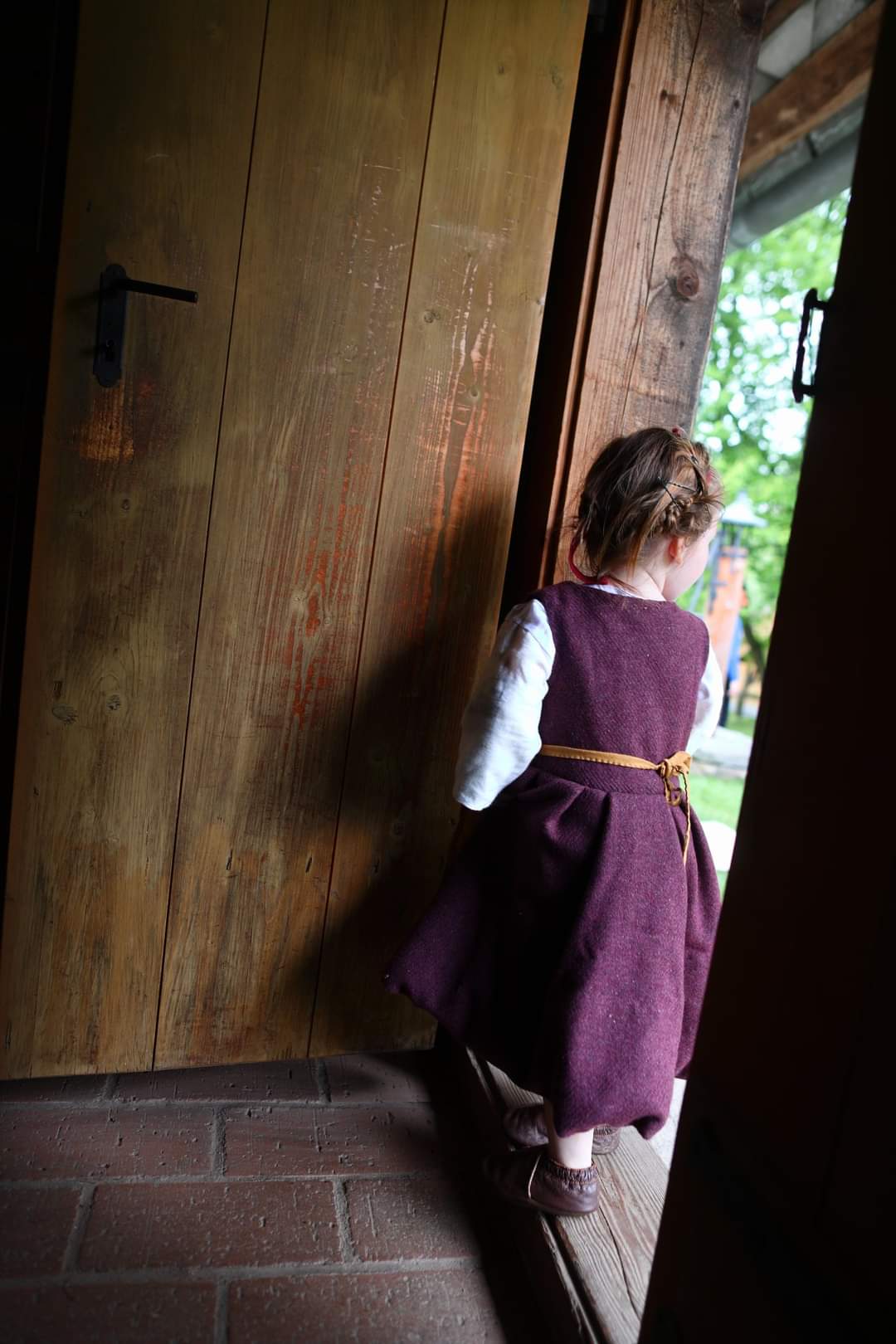
We owe this snapshot from Vysoký Chlumec to Páv Lučištník. I would like to return to the kirtle soon in a separate post and describe the process of sewing it, which is suitable not only for children's kirtles, but also for adults/women. The kirtle is suitable for the period from 1485 to 1625 for all social classes.
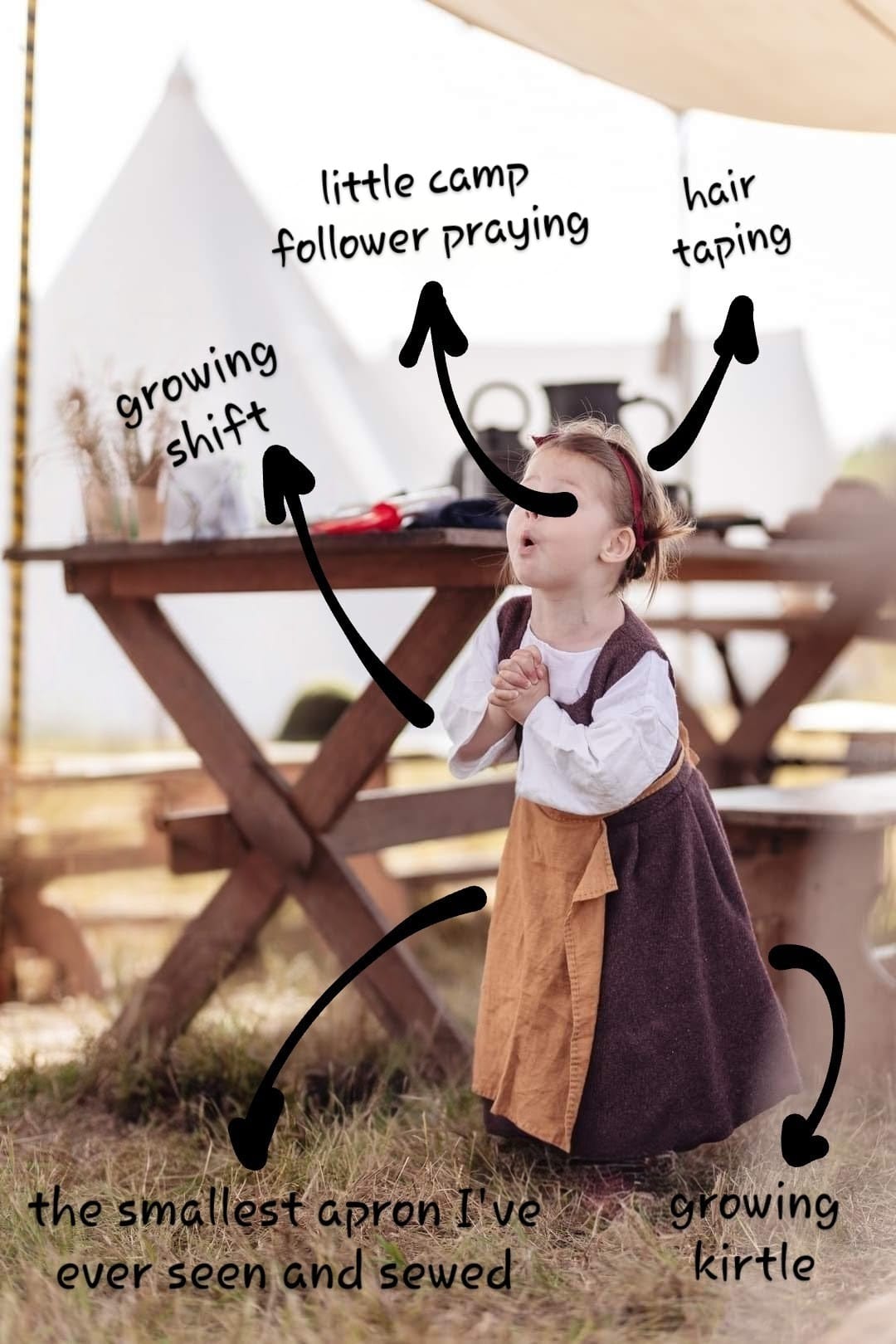
And this snapshot is from Honza Dvořák (HD-foto) from the battle at Lomnice (Slověnice) – thank you!
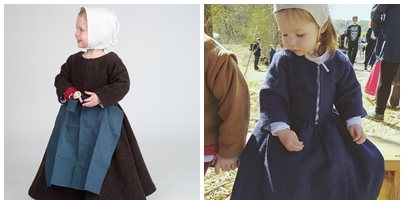
As a second layer, warm enough for colder weather, I chose an outer dress, or rather a warmer coat. Knowing that our daughter loves dresses, I couldn't have sewn anything better. It was practical for several reasons: dresses/coats are easy to sew and our daughter can wear them over a shirt and petticoat/kirtle, giving her a very warm layer for winter. To her delight, I decided to use fabric that was really enough for a very gathered skirt, so she has really gathered pleats that she can twirl around all day long. (This is probably one of the greatest joys for little girls.) The picture above is again a photo of a girl in a costume from the workshop of N. Mikhaila, whose detailed instructions can be found in the publication The Tudor Child: Clothing and Culture 1485 to 1625.
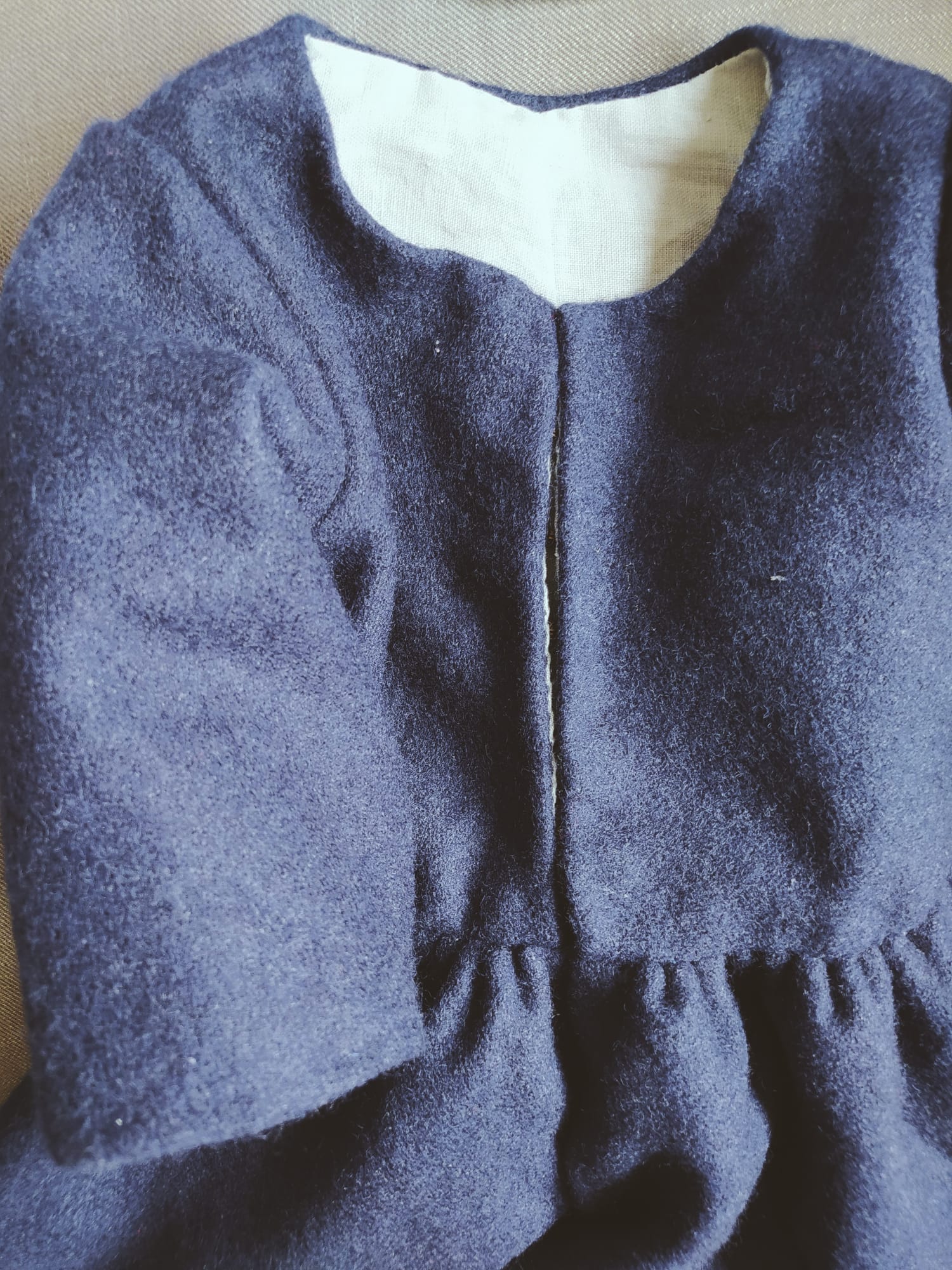
The coat is made of heavier, coarser wool. It is fully lined with light blue-gray linen.
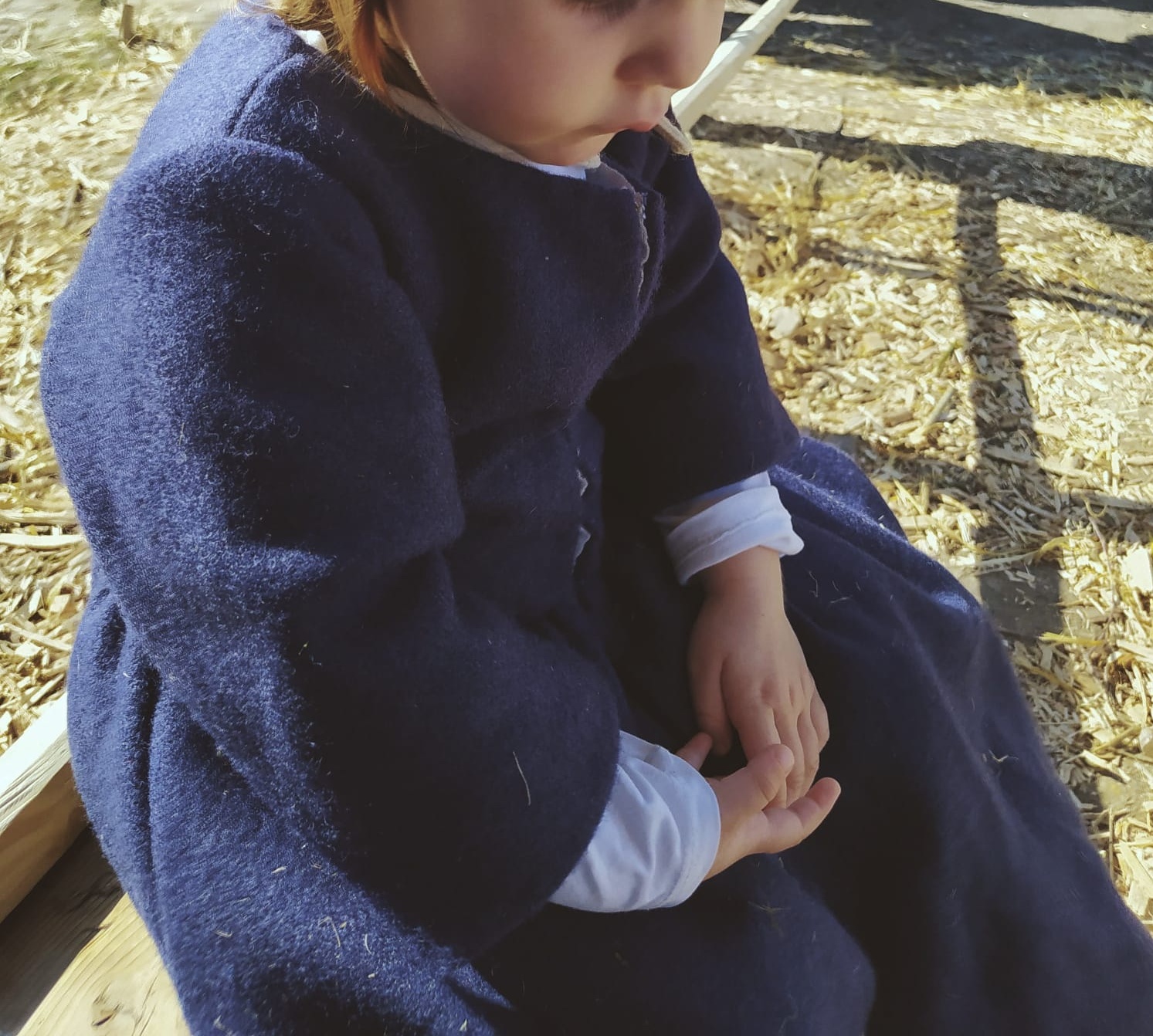
We wore the coat for the first time at the Libušín battle, where it was sufficient without undergarments. With spring just beginning, it was the best choice. Since we were all dressed in late 15th century attire for the Libušín battle, and these dress/coat is suitable for the period from 1485 to 1625, we were able to use it for this event as well. According to N. Mikhaila, the pattern is suitable for all social classes except the elite during this period.
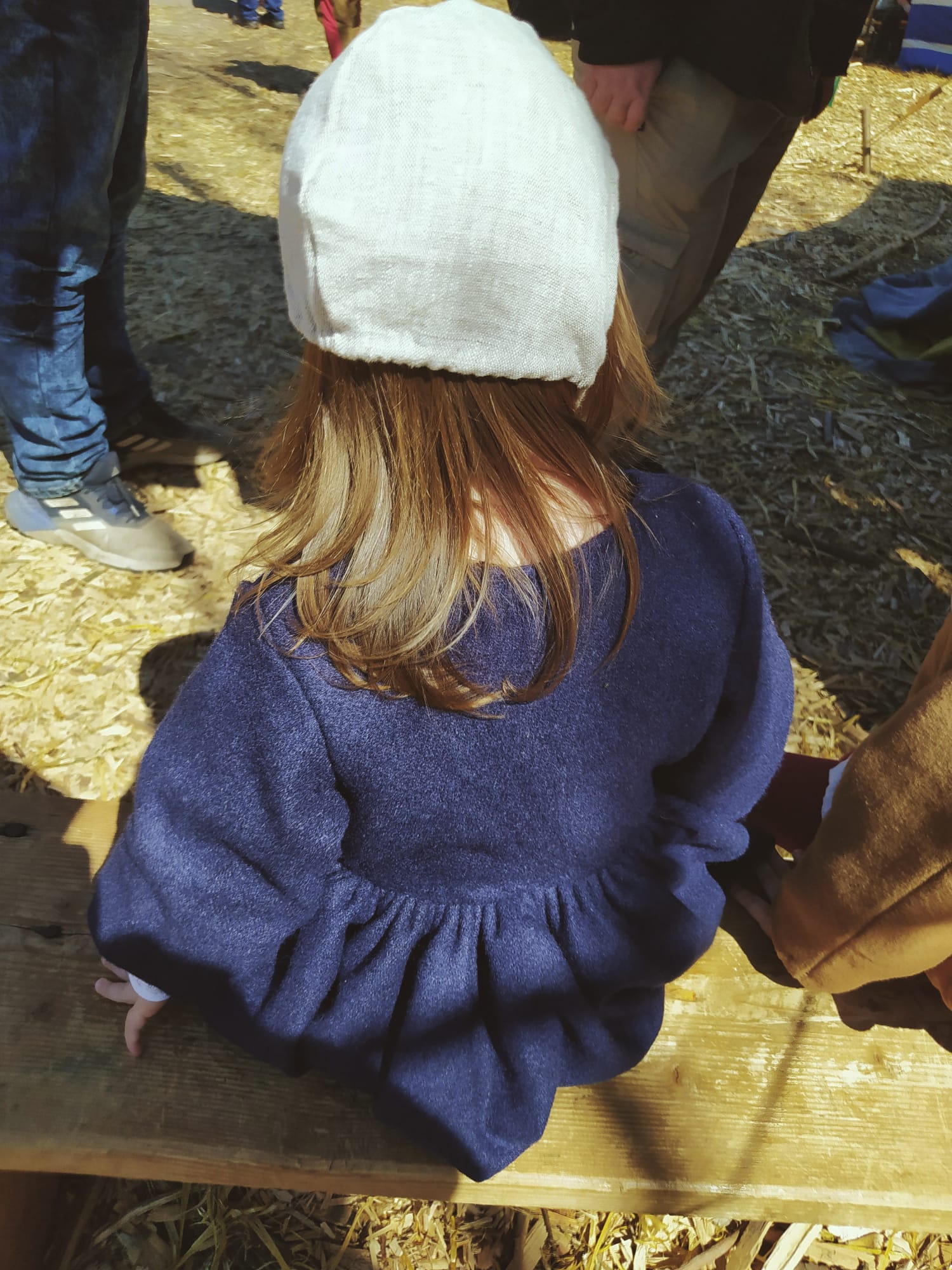
When making this dress, I tried for the first time the laborious task of sewing a densely pleated skirt onto the bodice. The result is beautiful, fully functional, and comfortable, which every parent will appreciate when it comes to children's costumes.
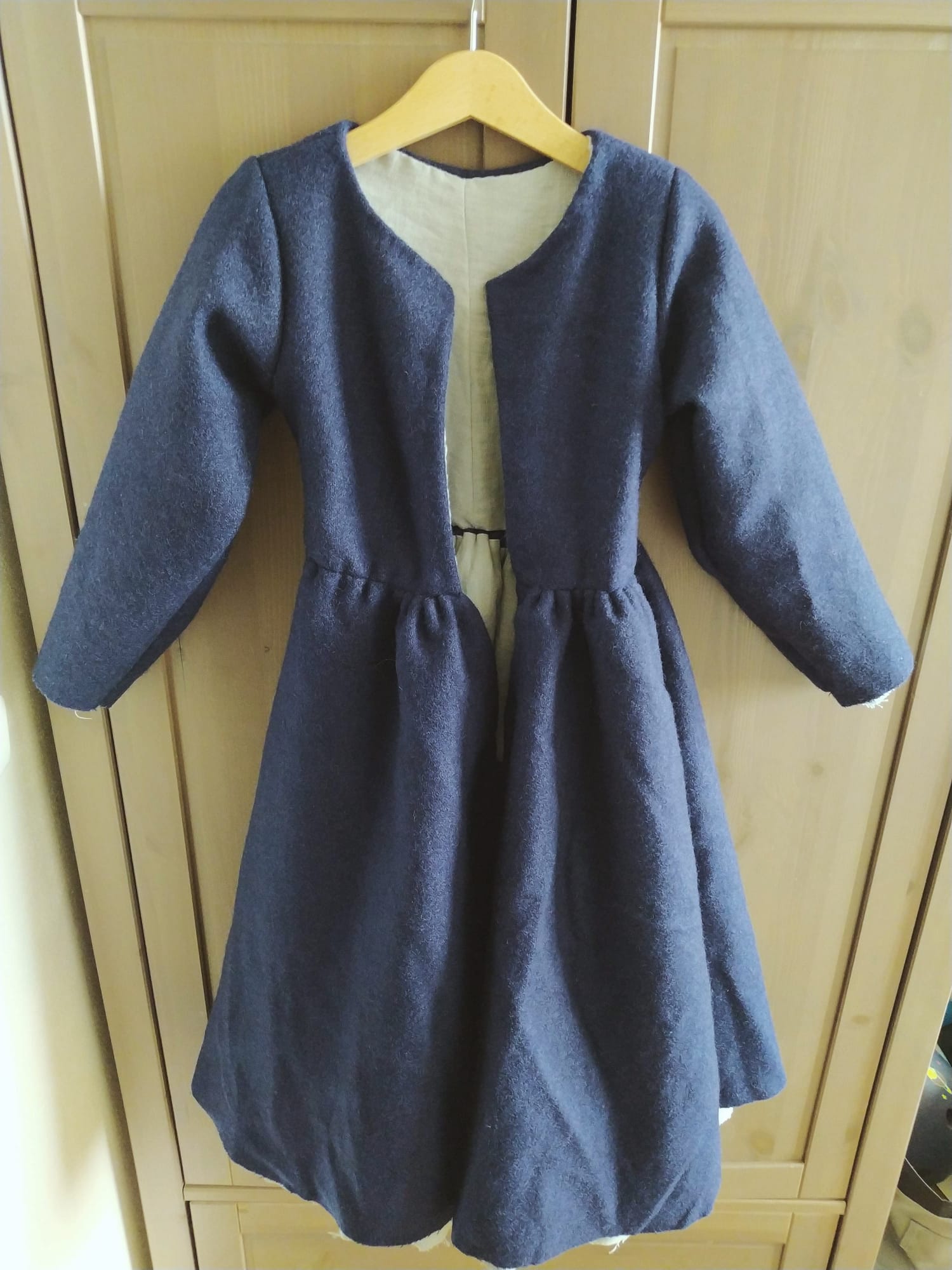
The coat was made with plenty of material for growing in the sleeves and overall length, and has already been lengthened since it was sewn to the maximum sleeve length. The width is always slightly larger at the beginning of all my costumes, as I know that children grow really fast and I try to do the first enlargement, i.e. lengthening and loosening, only after about two years. Therefore, the coat was a little looser at the beginning of wear, but the pattern itself is also supposed to be like that so that the young lady can squeeze into all the other layers underneath.
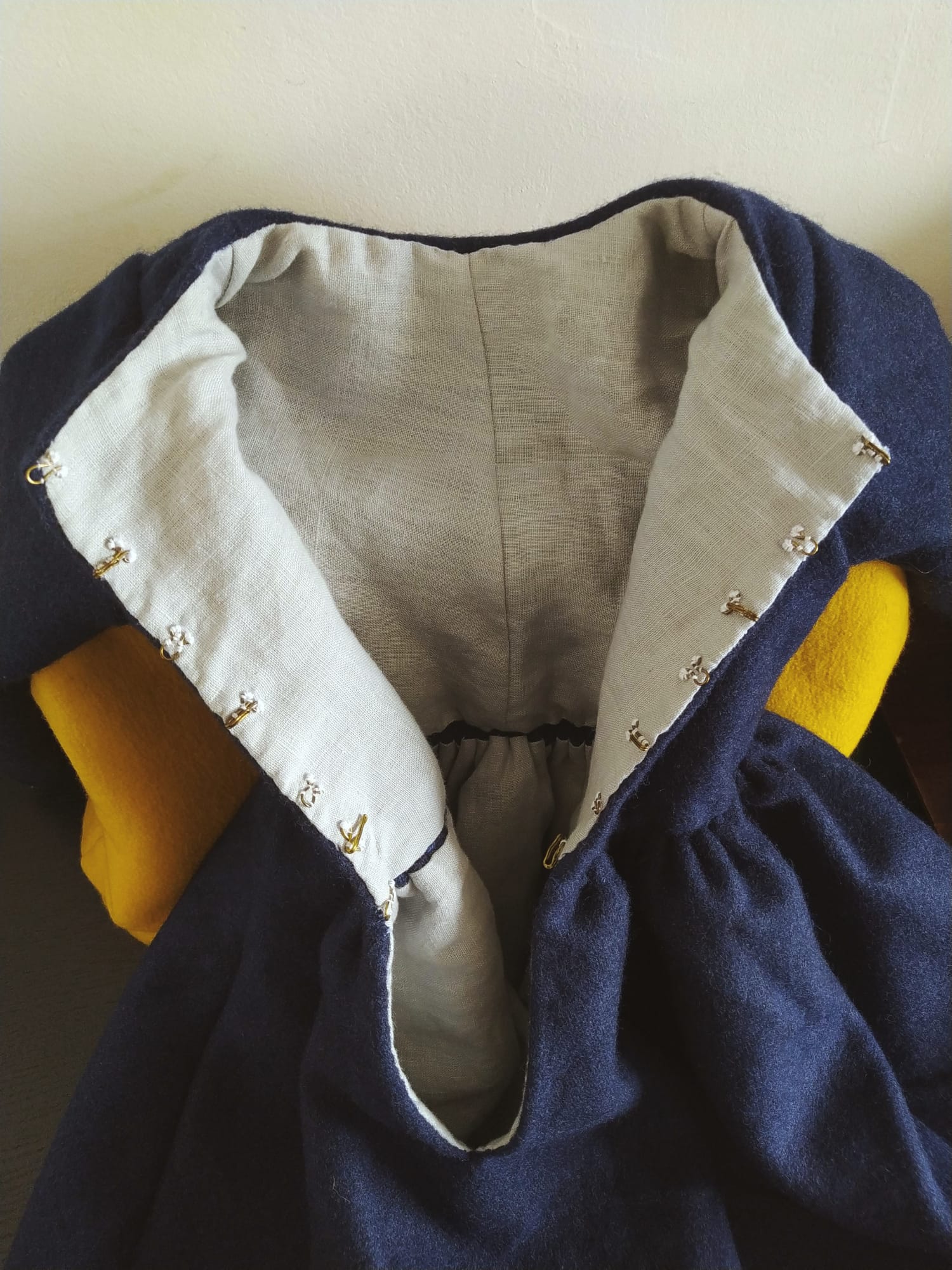
The coat fastens with brass hooks, and I will soon be preparing a more detailed tutorial on its overall creation from the abundant photographic material.
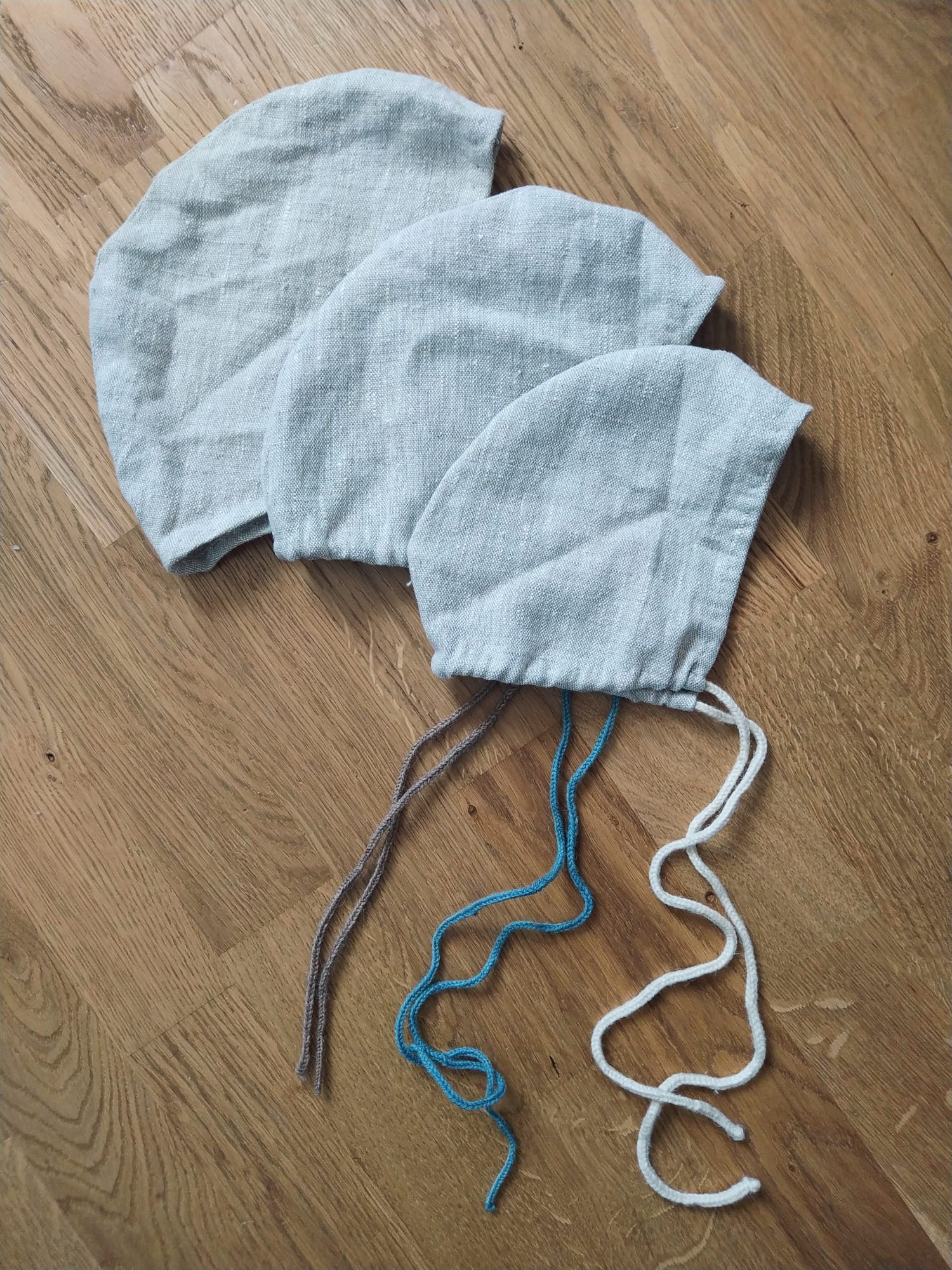
From toddlerhood, both of our children wore coifs as their basic headwear. I sewed countless coifs for myself, my children, and my husband (to go with his 15th-century costume). When the children were small, it was the only thing that stayed on their heads, thanks to the ties (they threw everything else off). The coif is very simple in design, and I believe that even the most novice reenactor can make it. For more information on women's coifs and patterns, I refer you to my older article below.
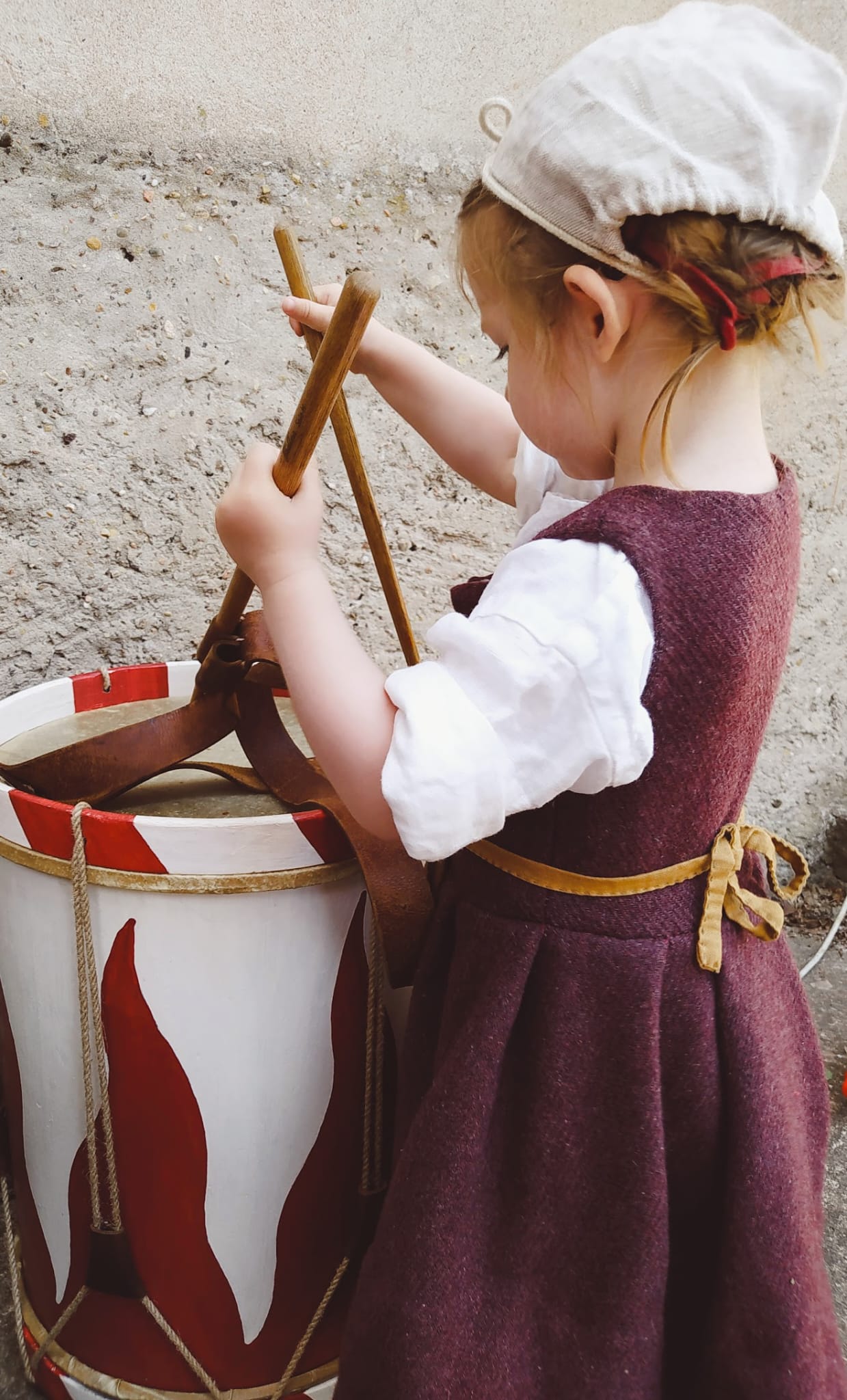
In general, I think that the youngest reenactors should choose their own headgear so that there is at least some certainty that they will wear it. Our children always wore coifs when I wore mine, which was all the time, as I never really take it off. Under the coif, I braided my daughter's hair in a period hairstyle – braids wrapped around her head/taping hair.
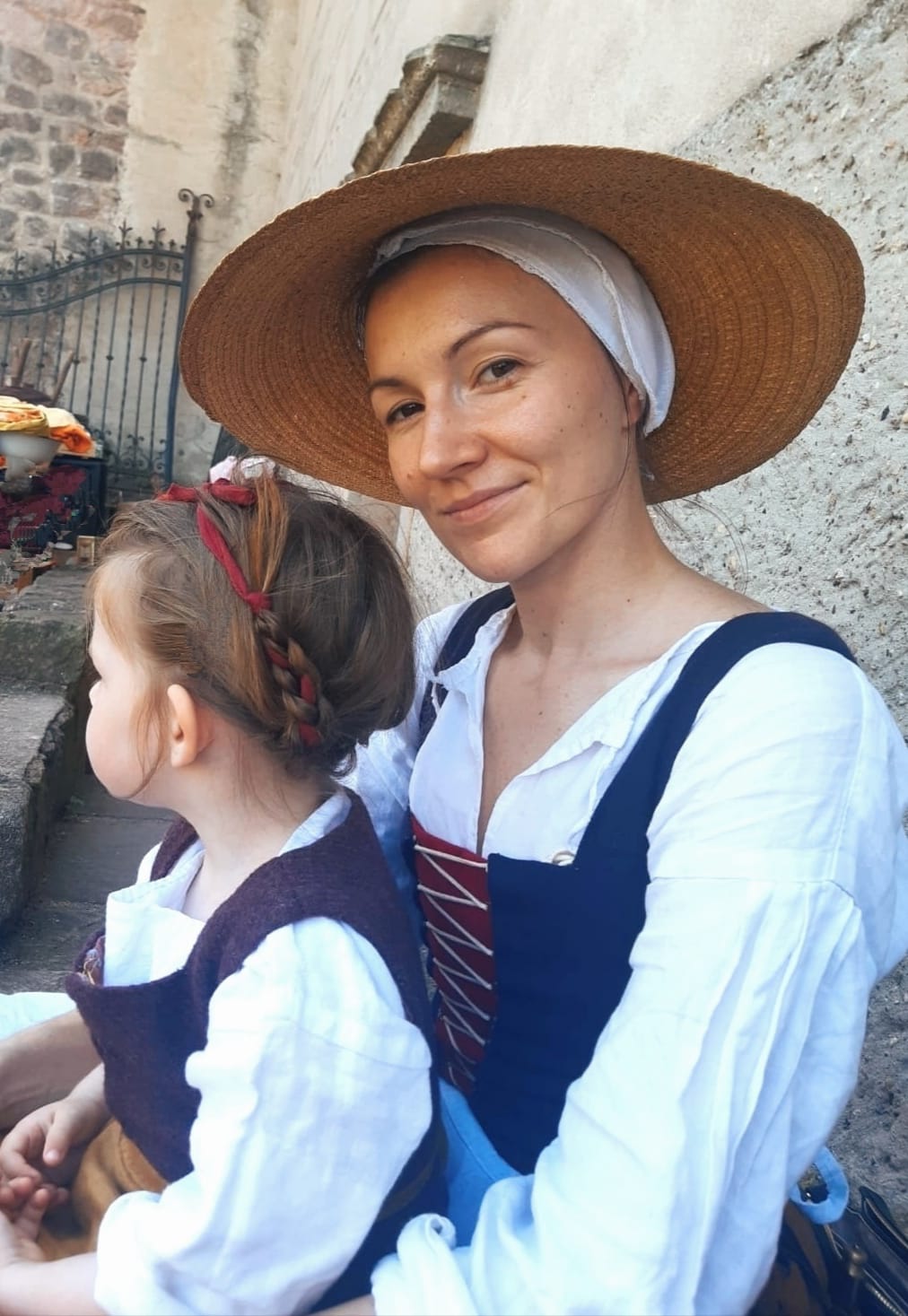
We would like to thank my mom for this photo from Pecka castle.
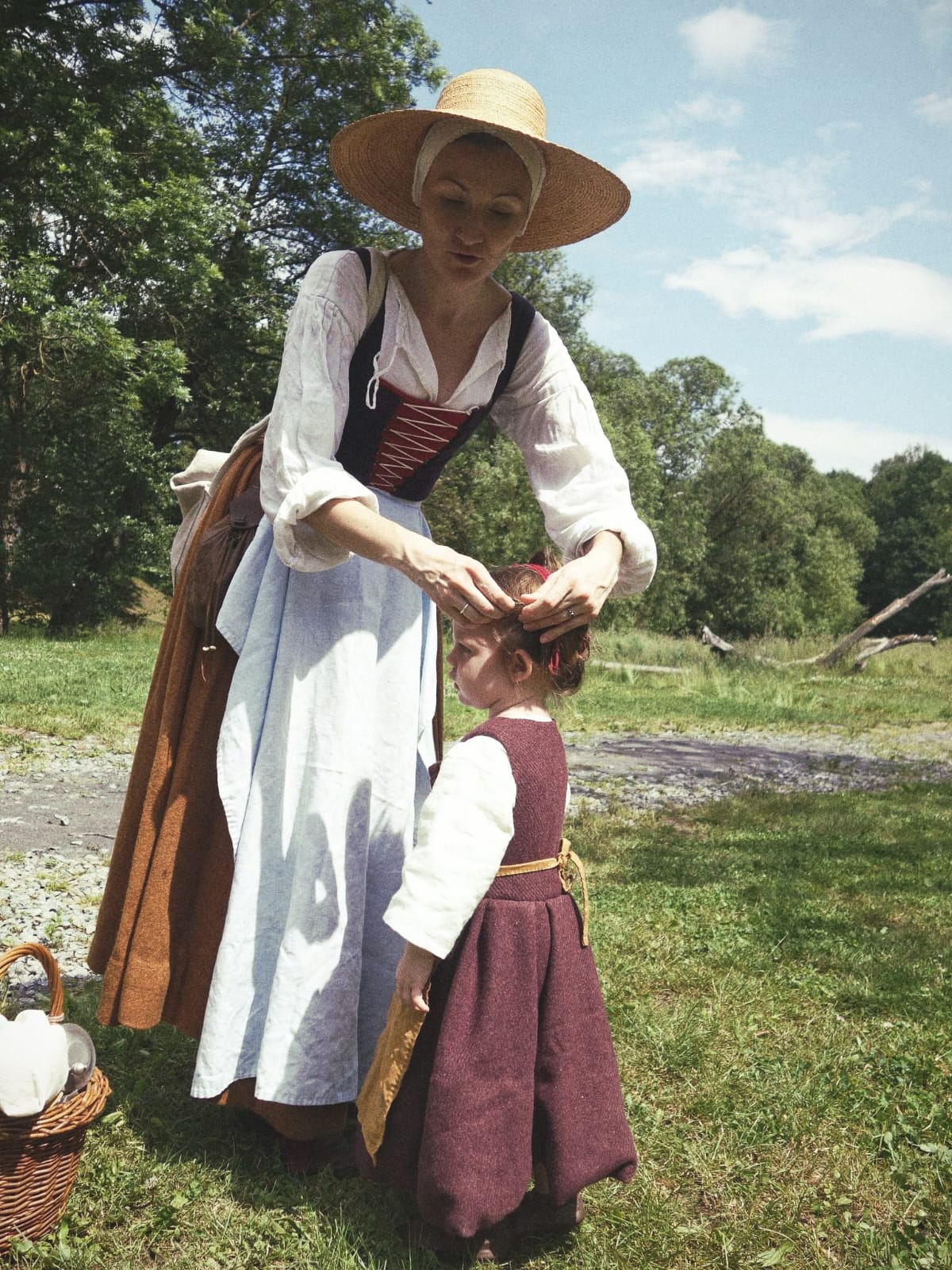
This hairstyle works well on little girls with medium-length hair as well. If the little lady can sit still for a moment, you can easily create a twisted braid using a single long strand. I have fond memories of this event – Soldiers in the Village – an event with the historical group Die Kompanie and Danar at the open-air museum in Vysoký Chlumec.
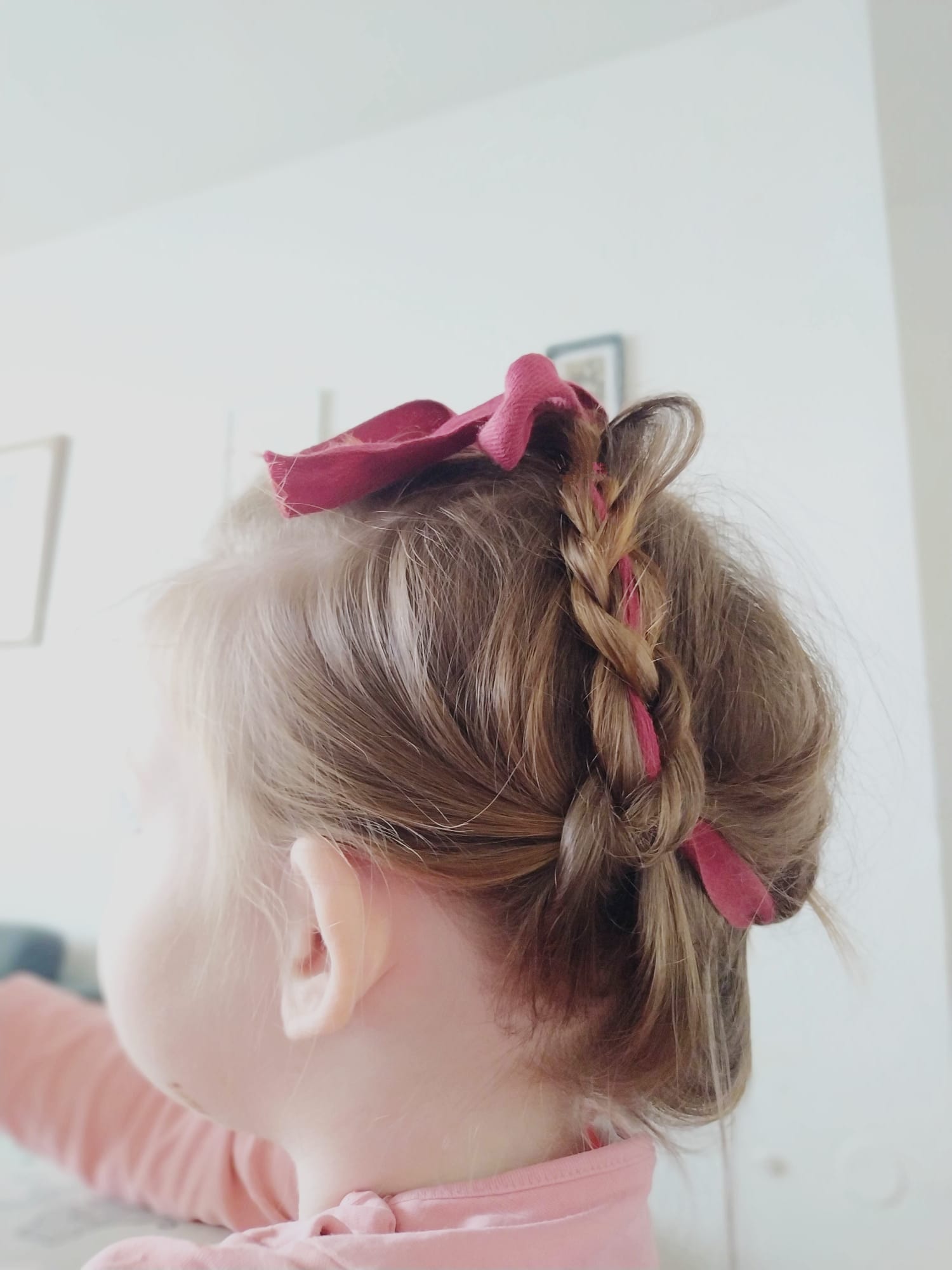
When my daughter's first hair grew and I tried to braid it before an event, it looked like this. With each subsequent braiding and practice, the braids become tighter and neater (provided that the child stays still during braiding). So that you don't have to read an article about coifs and period hairstyles, I will try to describe the process very briefly in bullet points:
1) I comb the hair into two halves on the left and right sides and get ready to braid two pigtails à la Pippi Longstocking.
2) I take a string about 1 m long and braid it into a single braid halfway along its length – when braiding, I treat it as a piece of hair (one end of the string hangs down).
3) At the end of the braid, I wrap the string around the end of the braid and tie it in a knot to secure the braid.
4) I repeat that on the other side, with the second braid.
5) I lift up the ends of the braids, where the string should hang below the knots, wrap them around the ears and tie them around the head.
6) For a firmer hairstyle, the ends of the strings can be wrapped around each braid before tying, threading the string through several places at the roots of the hair.
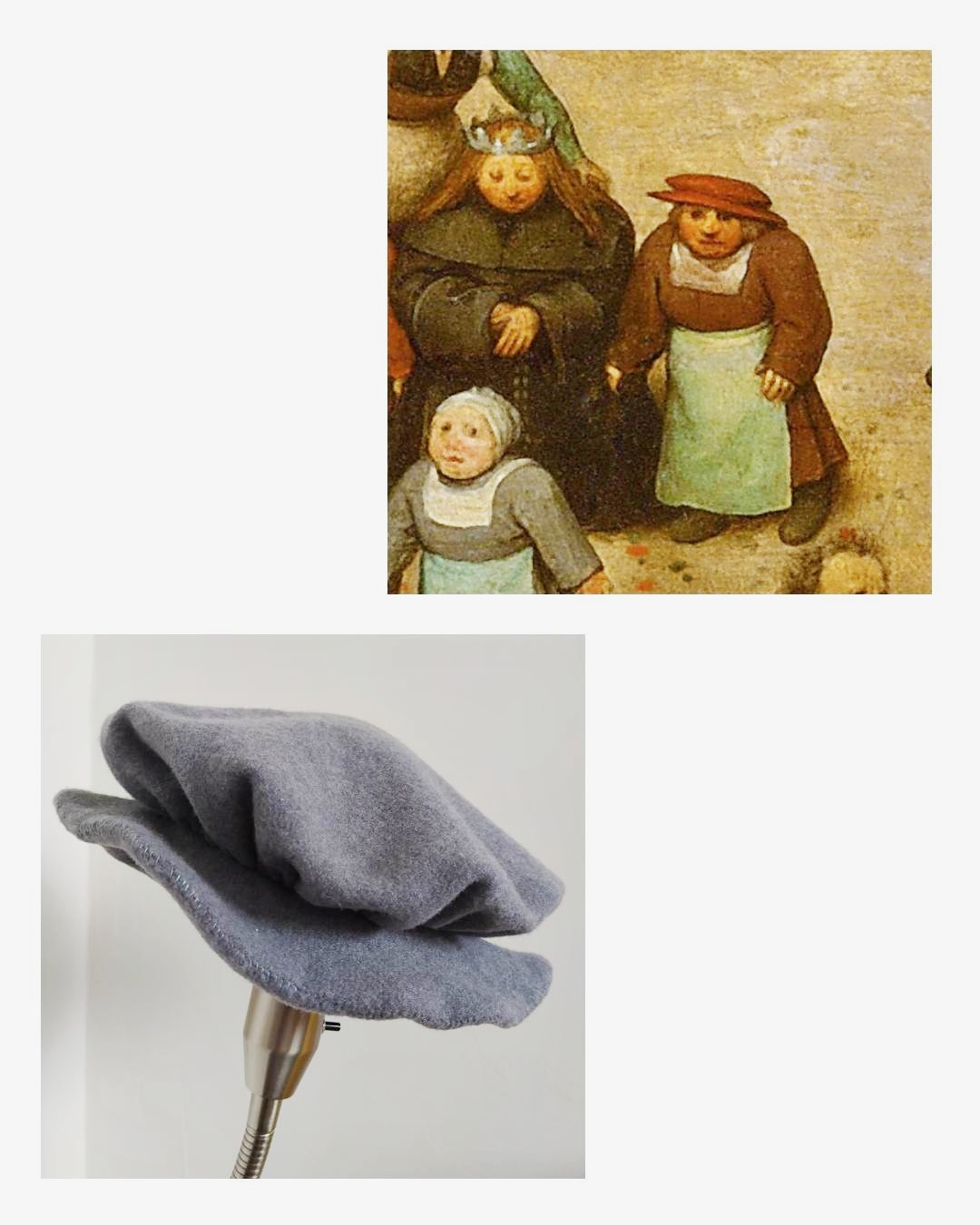
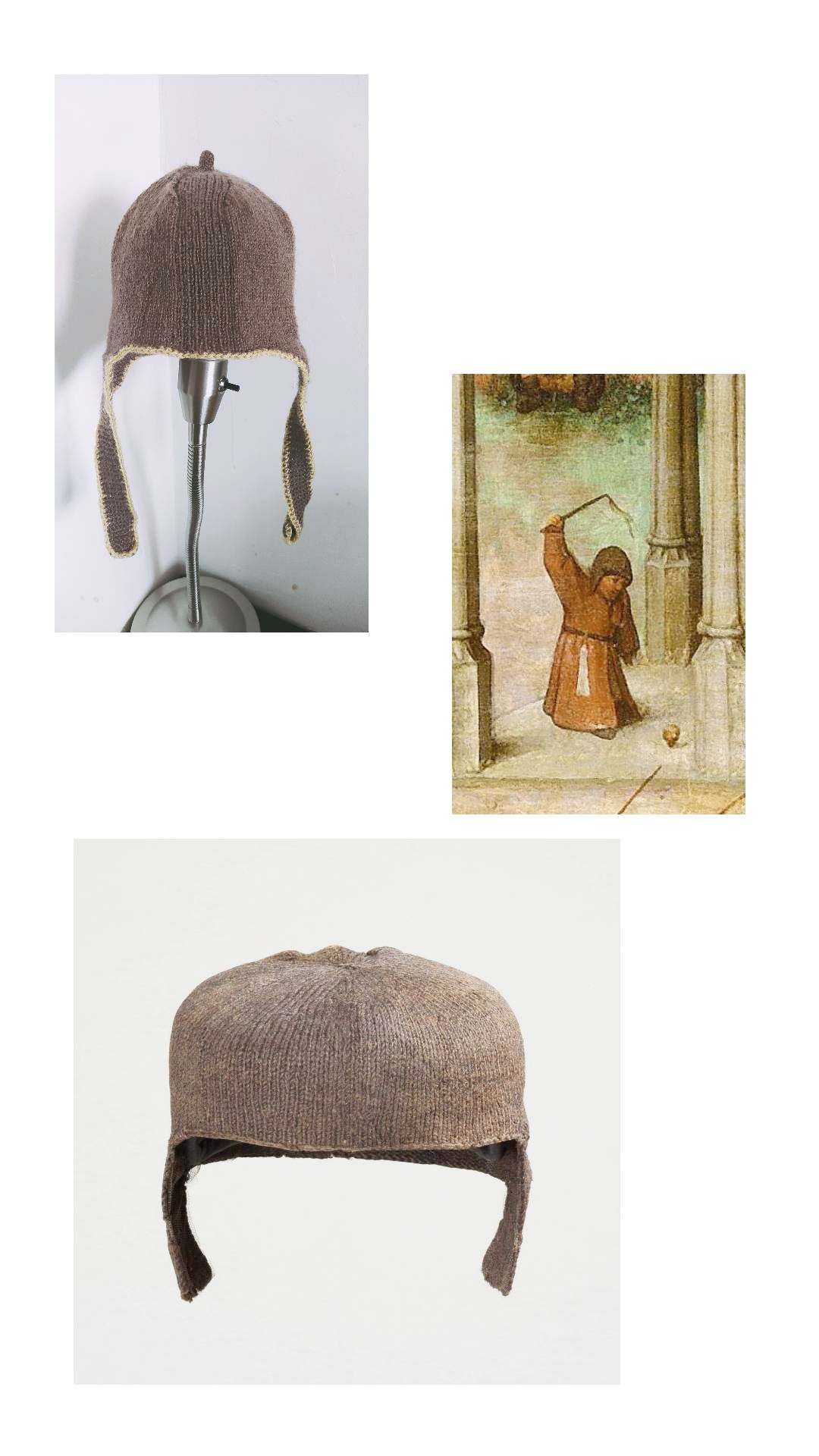
My daughter's favorite headwear was initially a bonnet, which I sewed for my son after much hesitation. I hesitated to sew it because it no longer fits into the Czech environment, but when we used it, we got the look of a little Tudor girl, which would not have been theoretically impossible in the Czech lands at that time, so I sewed the beret because of my great fondness for this nice head accessory. Once again, the inspiration comes from none other than Bruegel's work Children's Games, where we find abundant depictions of bonnets on children's heads.
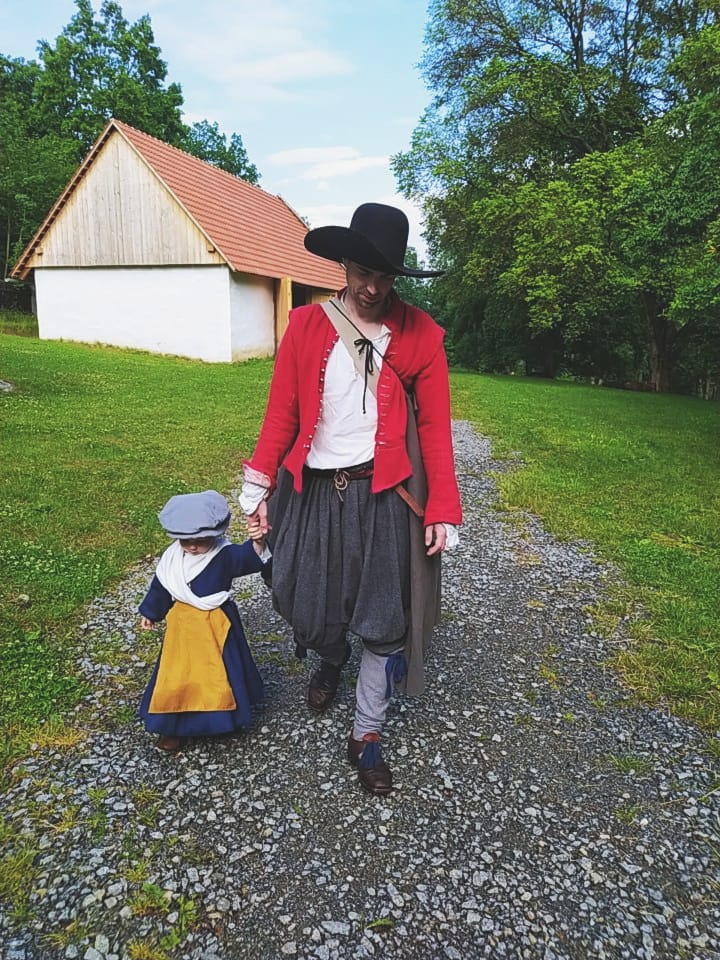
It proved particularly useful in the rain, when it really protected the head well – it is sewn from warm wool and lined with linen. I am planning to create a tutorial for it, so hopefully you will find it on the blog soon.
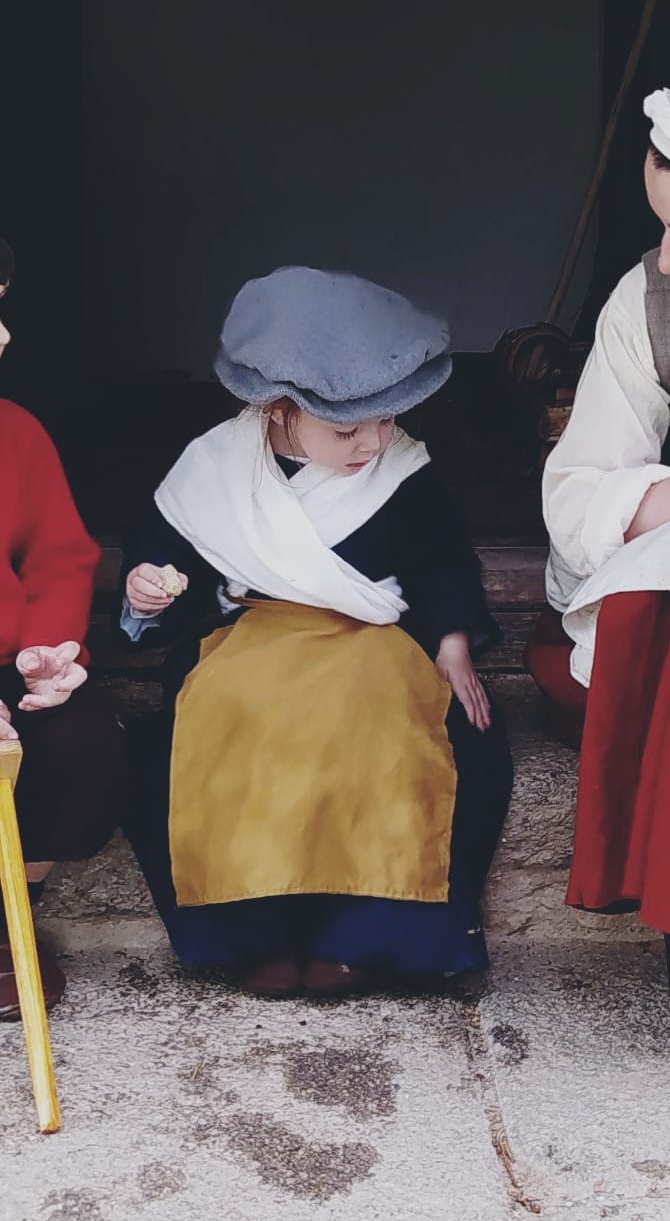
The bonnet is warm and can be worn over a coif, providing double protection from the cold, which works very well in strong winds and cold weather, especially because the coifs also covers the child's ears.
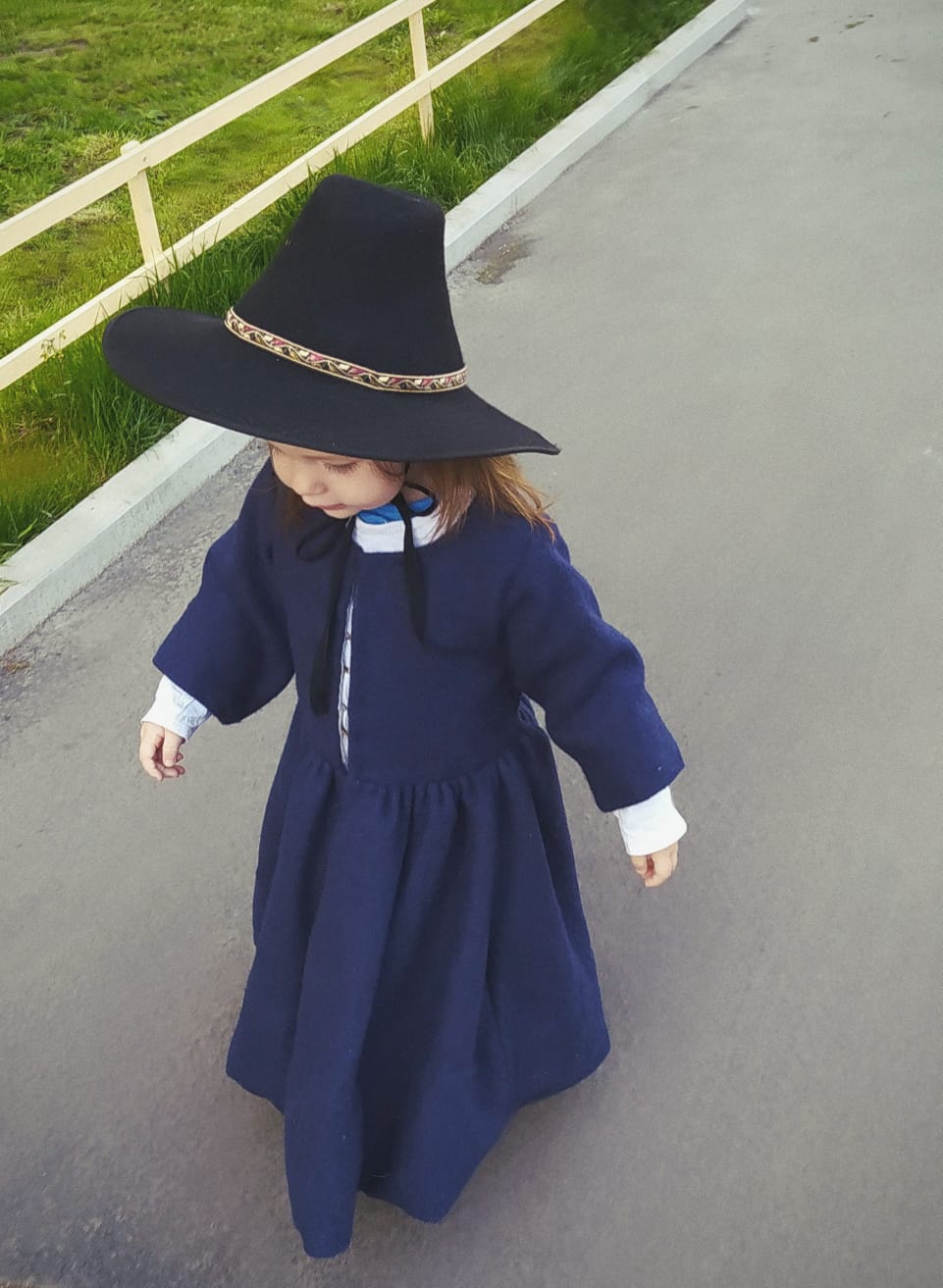
Just like my son, my daughter loves hats, and this one is currently her favorite. She borrowed it from me, and I'm afraid it's been confiscated permanently. The hat is smaller, and I bought it in Grolle, Holland. It has a popular period pointed shape, and the advantage is that it has strings for tying. I used to tie it at the back of my head, but I tie it under my daughter's neck so that it doesn't fly off. It's a handy trick for children's hats. The hat is decorated with a silk ribbon, which I also bought at a stall in Grolle, and its small floral embroidery apparently caught my daughter's attention. Although I will probably have to buy a new hat, I am glad that my daughter wears it—there is no better headgear for rain and winter, and it is also a universal size (she will soon outgrow the bonnet).
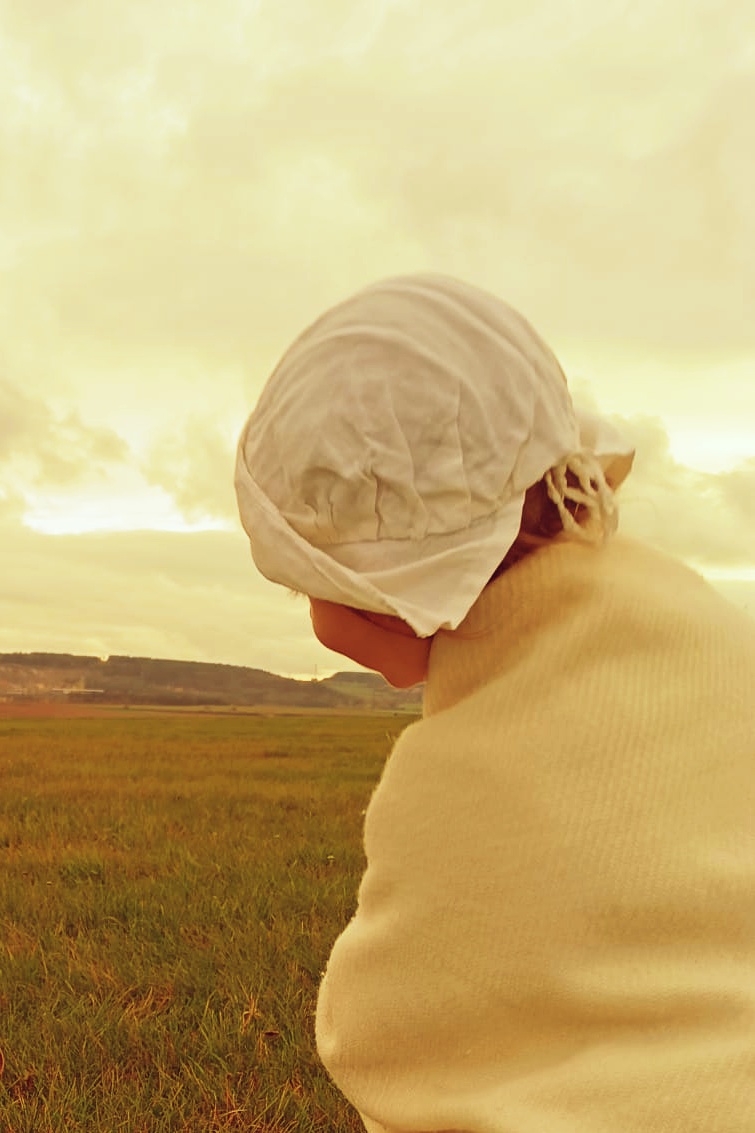
Since my daughter likes everything her mother wears, she also likes my coifs, of which I have several, and whose designs I also wrote about in my article on comfort in coifs. This type is inspired by Dutch paintings and is still too big for my daughter, but thanks to the tie at the back, it stays on very well.
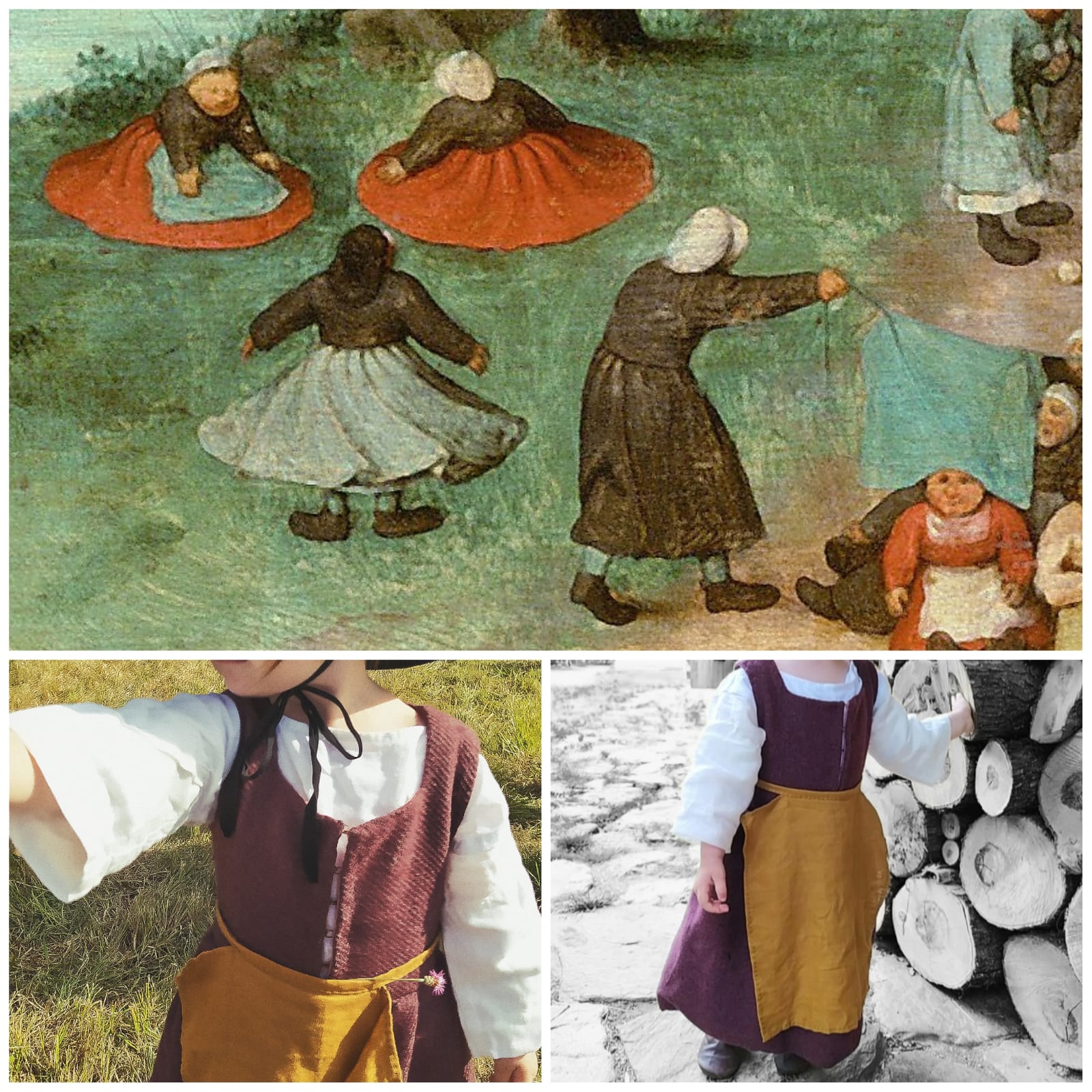
As we can see in Bruegel's painting, aprons were an essential accessory for little girls. I consider the apron to be an absolutely indispensable part of the costume, not only because of its practicality in the kitchen, but also because it adds variety to the overall look of the costume and because women wore it regardless of their status – it was an accessory that had many functions, and I would like to mention its significance in a separate article.
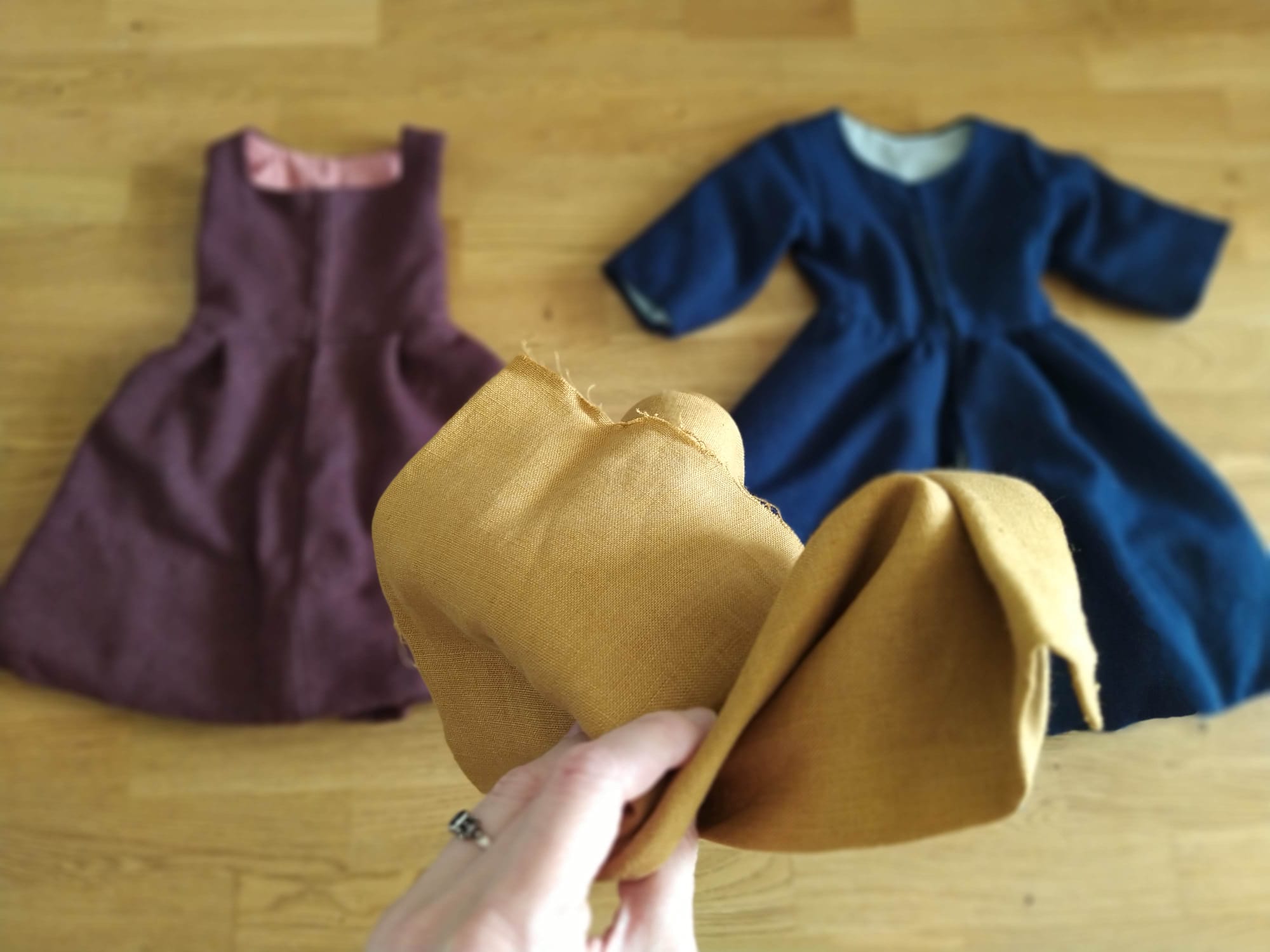
For the girl's apron, I chose mustard-colored linen, which I liked the most and which is very practical in terms of color when it gets dirty.
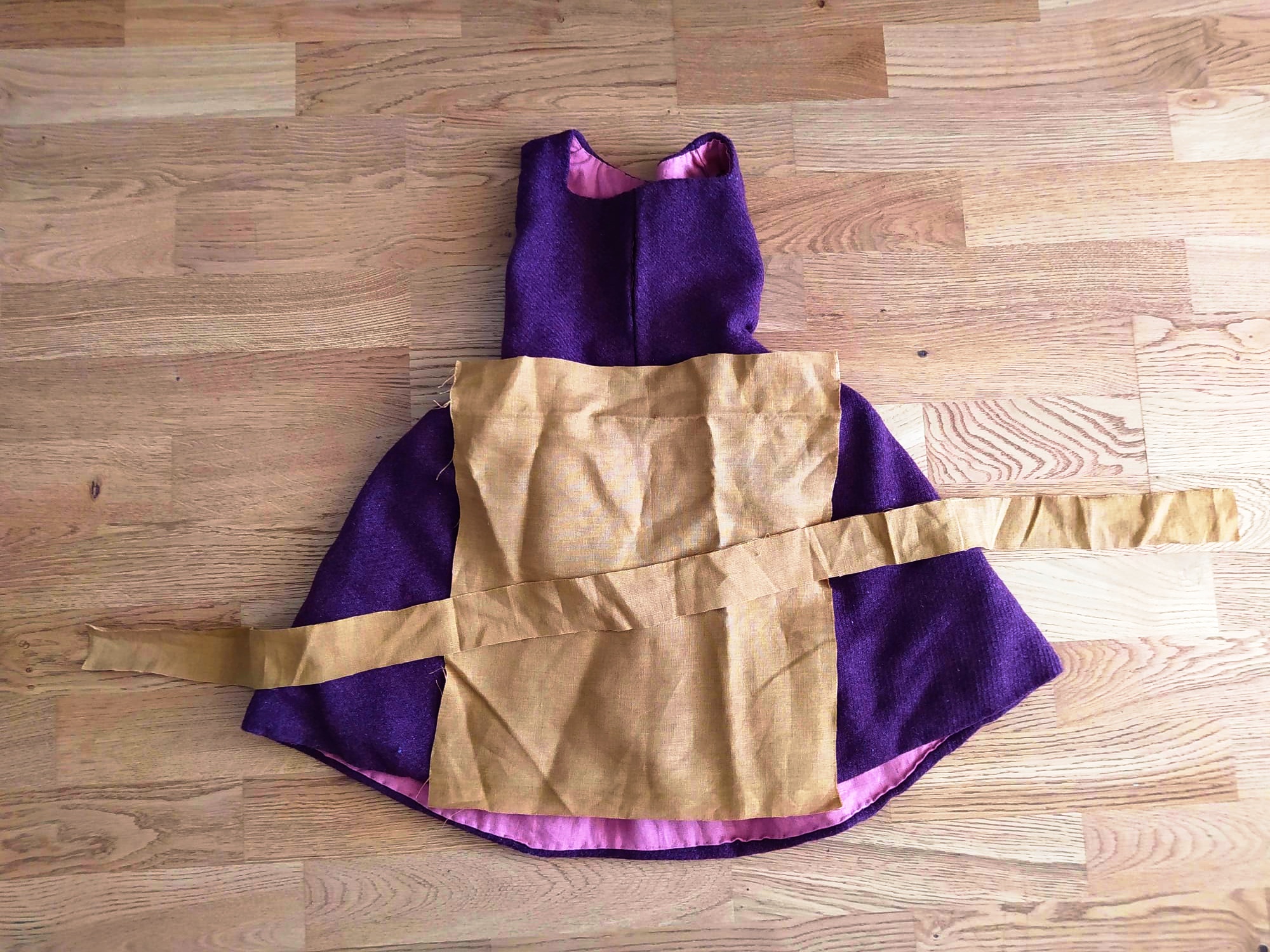
The pattern is very simple – it is a thin strip of linen sewn onto the shorter side of the rectangle. The corners of the upper edge are removed from the strip to create a period apron with hanging edges.
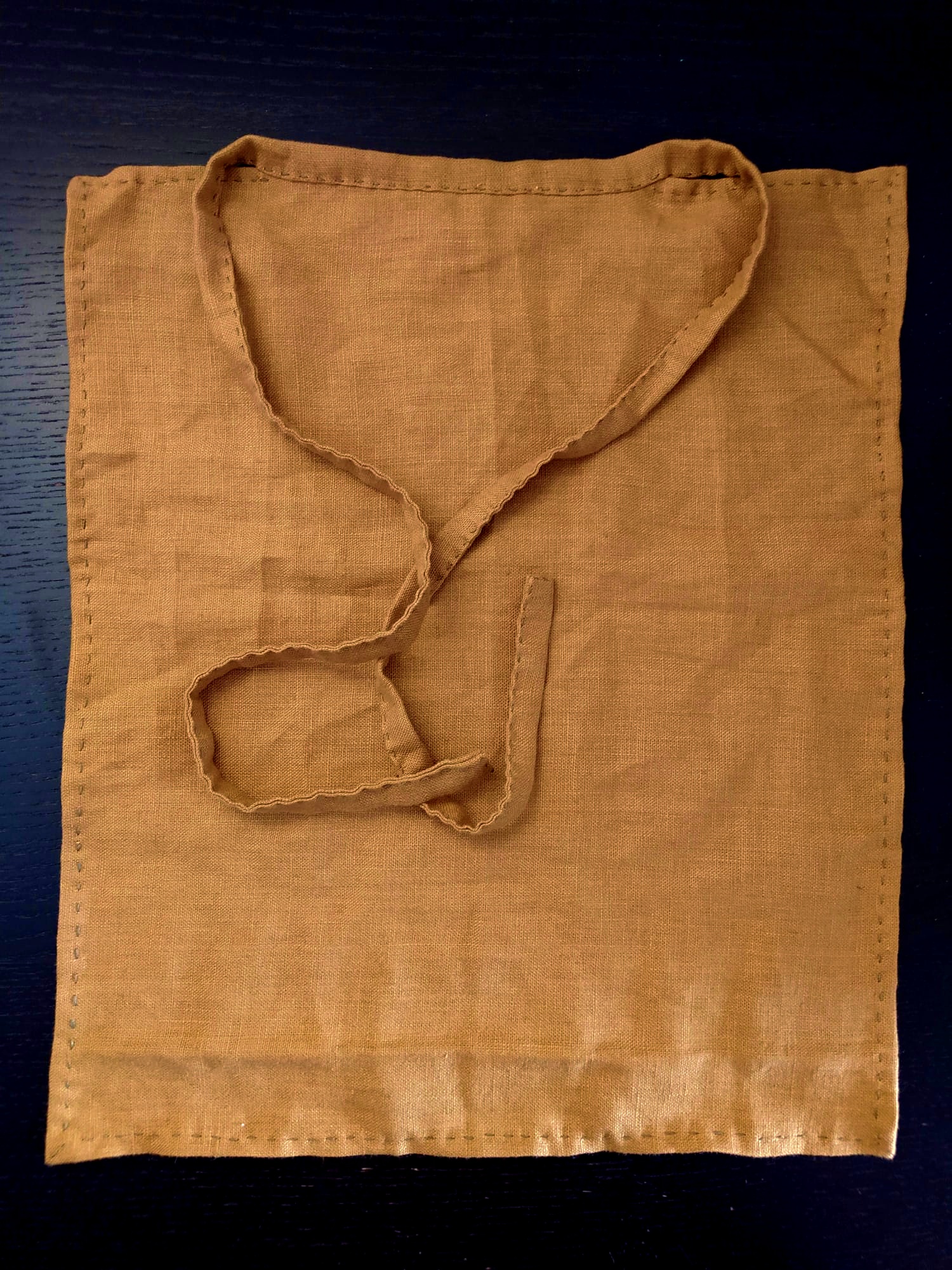
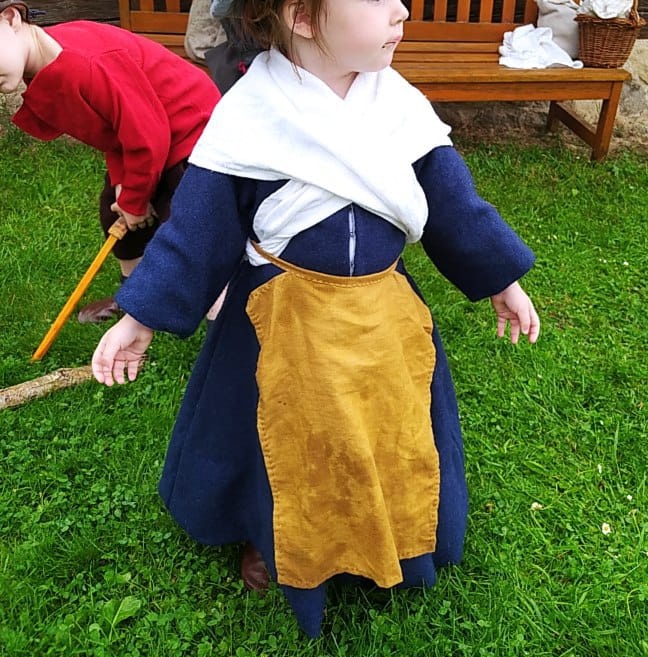
For cooler weather, I always have various linen scarves or a single-color blanket handy. When it rains or is windy, my daughter and I often wear a scarf around our necks and over our shoulders, which we usually tie around our waists with apron strings so that it doesn't flap around. Such accessories can then be layered as desired.
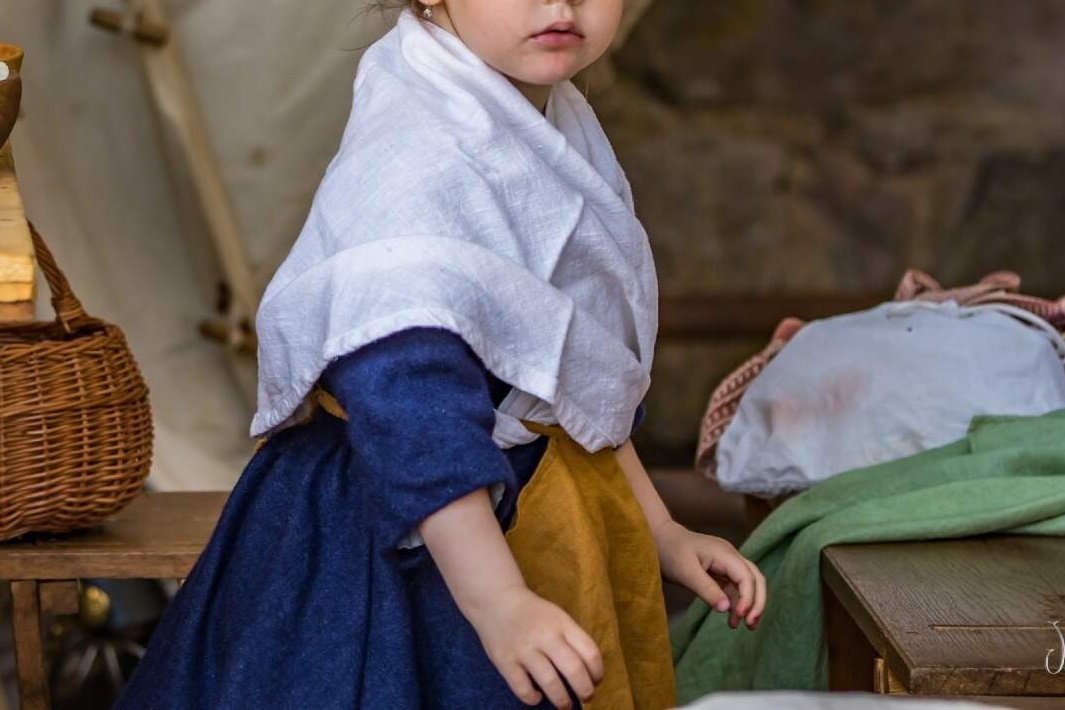
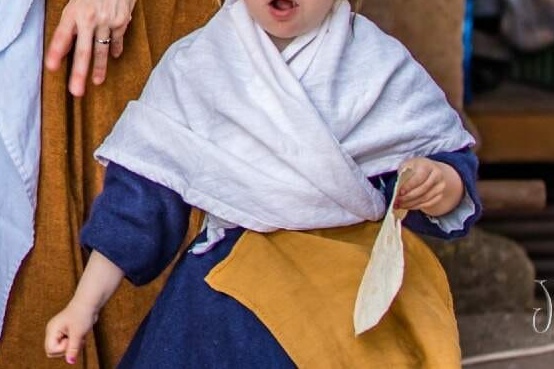
We have linen scarves in several variants: larger triangles, smaller ones, thinner and lighter linen, and also this one, for example, which is warmer for colder days. In this photo from Pecka Castle, you can see that it was time to lengthen my daughter's sleeves. We would like to thank to photografh Frýzl for this photo.
© Frýzl
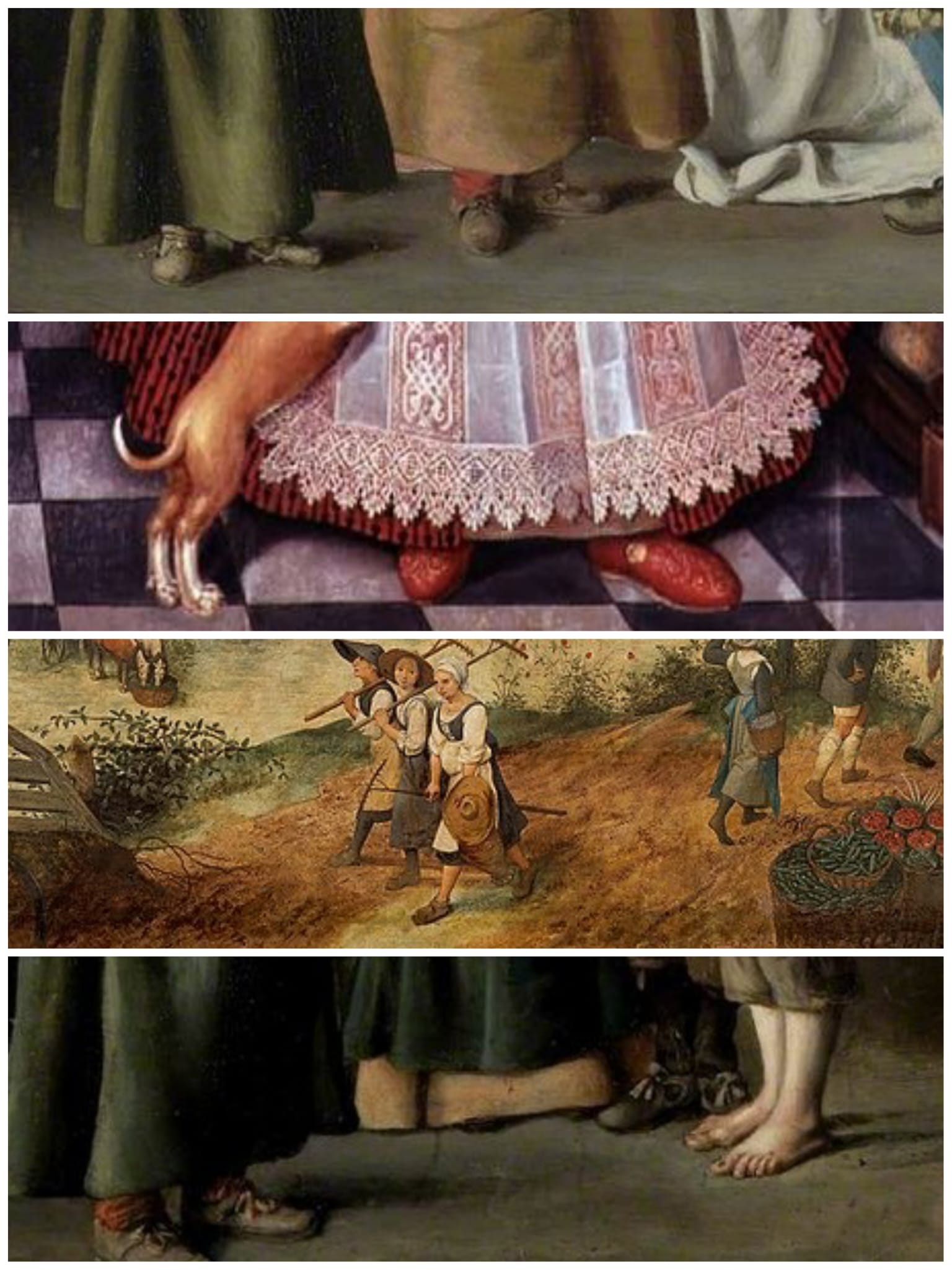
Unless the children are running around barefoot, I try to make sure they have socks and shoes that are as period-appropriate as possible. The girls' socks and shoes did not differ in color or style from those worn by adults. In the collage from the documentation above, we can see low leather shoes worn by both the lower and upper classes. My daughter usually wears earth-colored tights under her costume. On colder days, we keep her feet warm with knitted socks, which we layer over the tights.
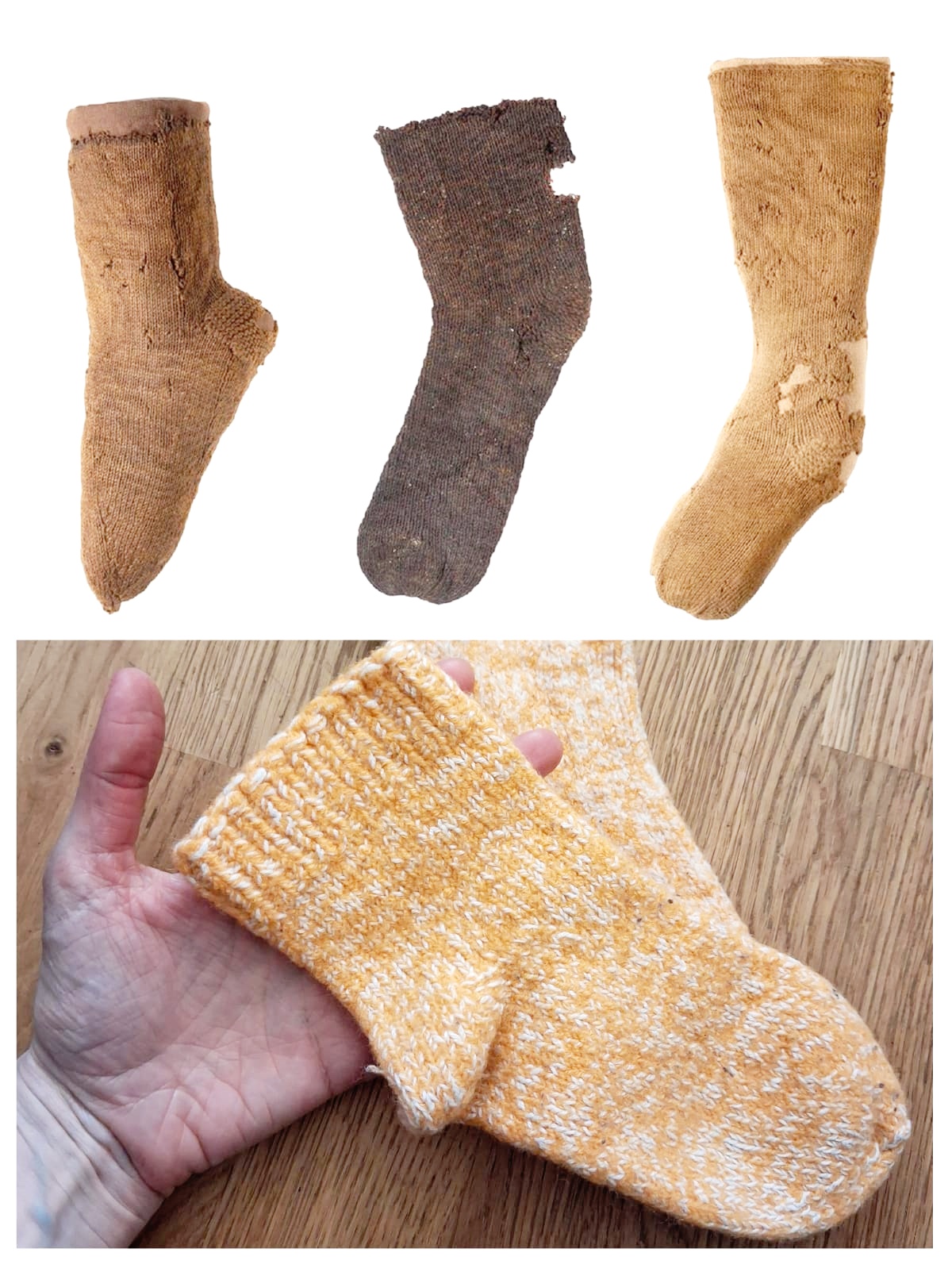
I already made collages with socks for boy´s outfits, so here is the girls' version, as we have these new yellow knitted socks now. As I wrote earlier, I would look for socks in the grandmother's closet or have them knitted by someone skilled (to order, for example, on the handmade portal Etsy, where you can also find ready-made pairs). The collage above our socks comes from the website of a London museum - the linked image shows preserved Tudor knitted accessories.
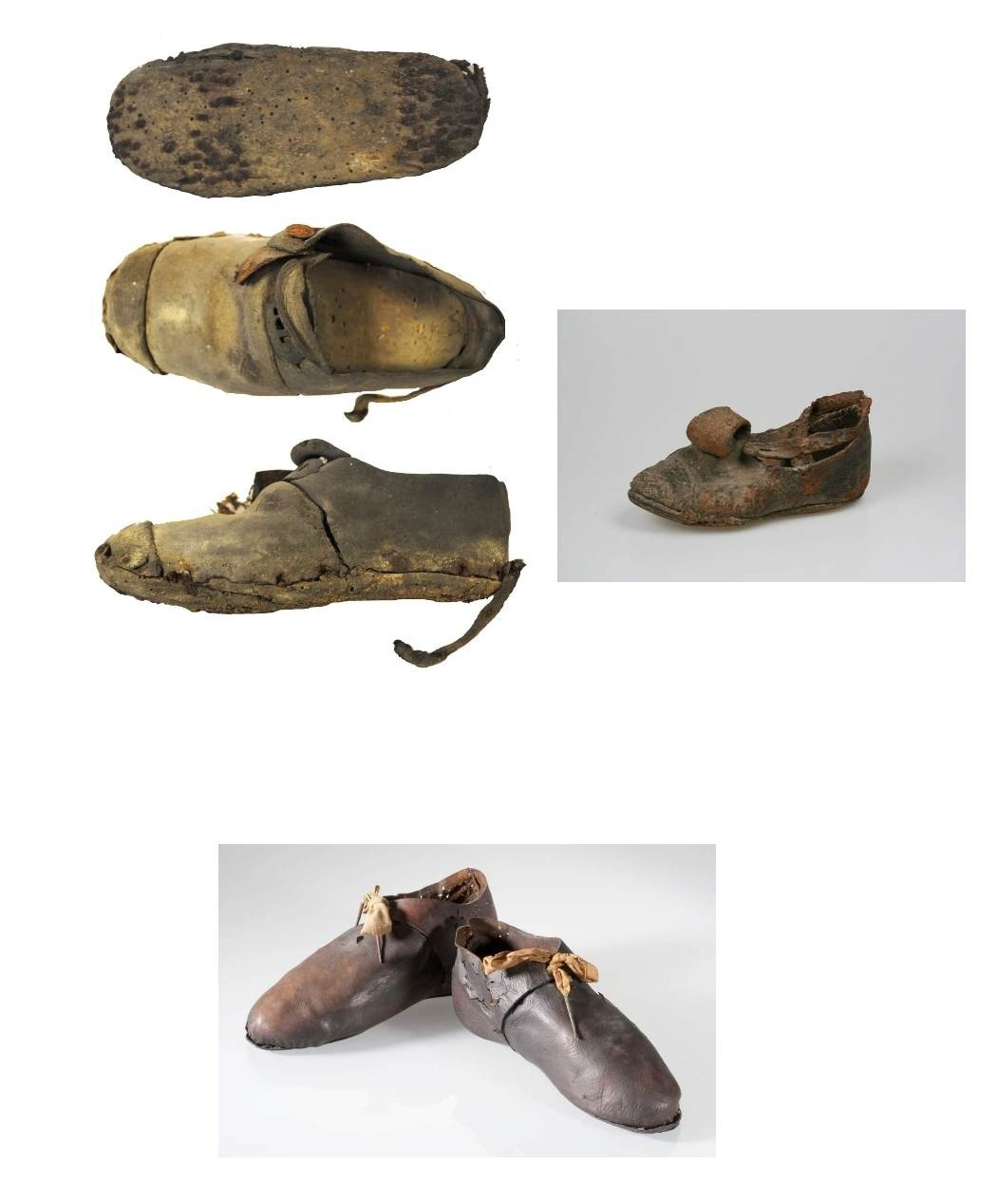
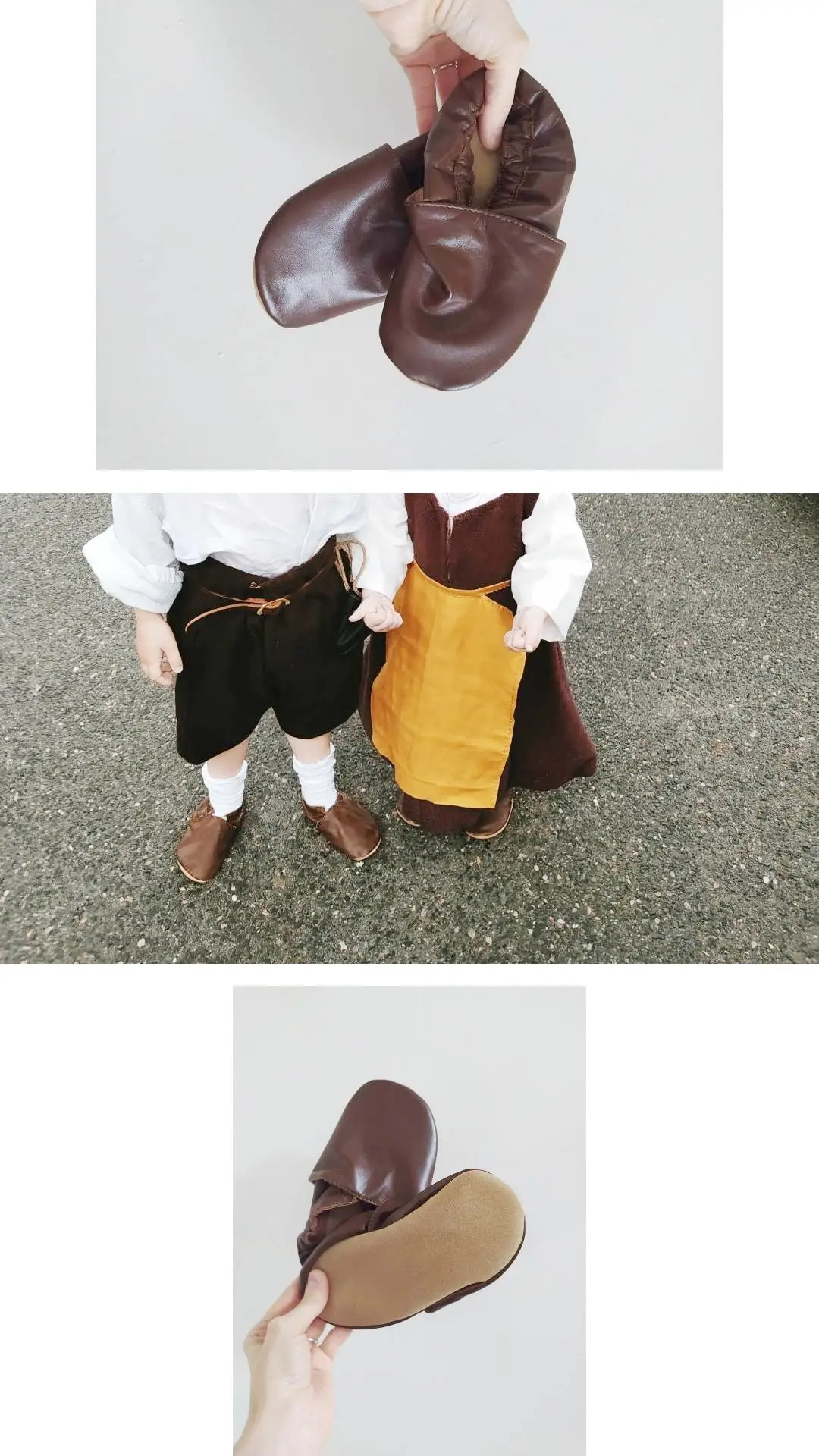
As I mentioned earlier, due to lack of time, I bought leather slip-on-shoes that don't detract too much from the authenticity of the costume. The children liked them so much that we bought them as long as they were available in the right size. They are definitely suitable for such small children because they can easily put them on and take them off by themselves, so I don't have to run around tying shoelaces all the time. The leather slippers/slip-on-shoes like these stay dry inside for a long time, even when walking on wet grass, and both of our children love them.
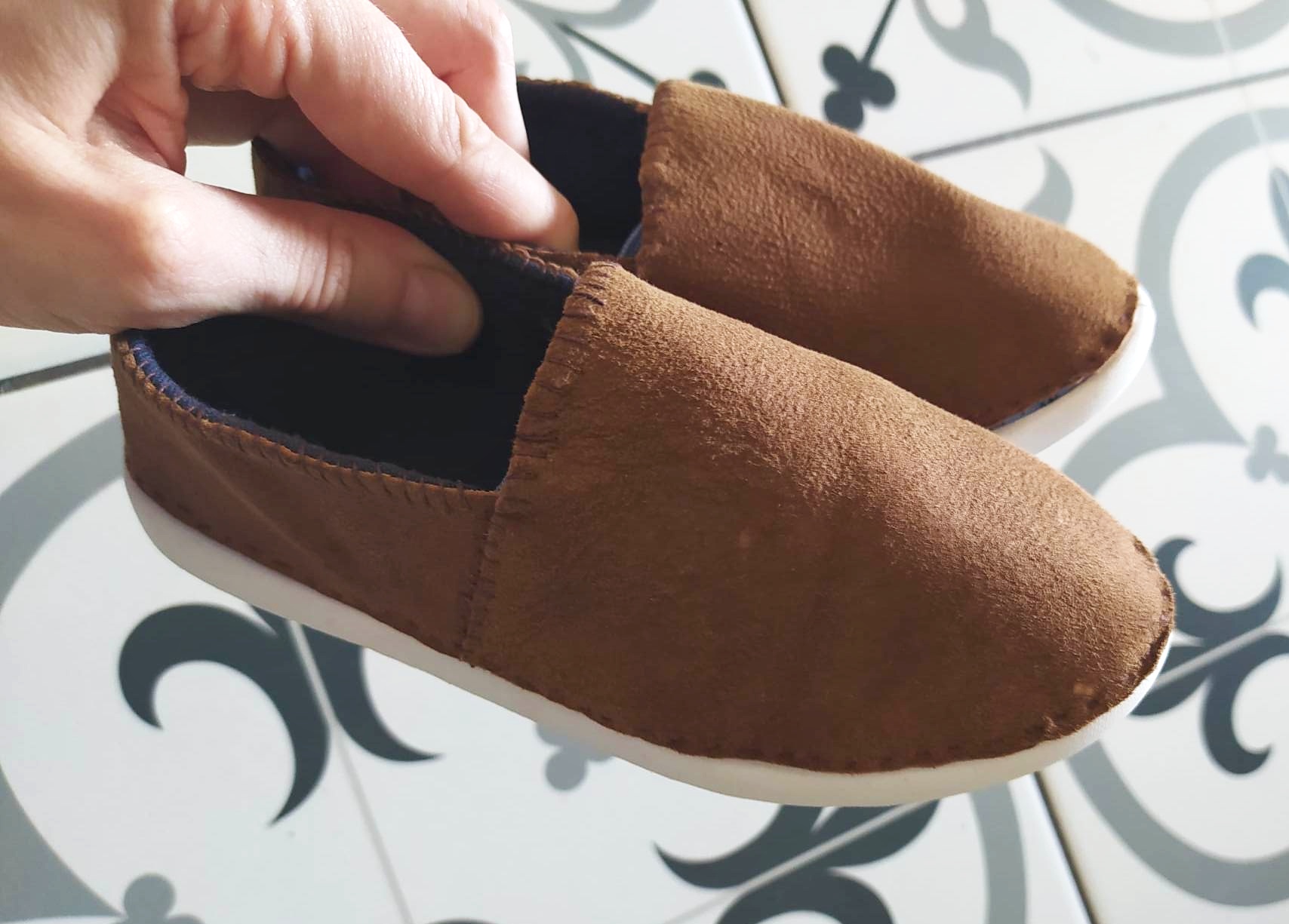
It is also possible to improvise with older shoes or, for example, inexpensive trainers. I first tried sewing leather onto cheaper slip-on shoes from Pepco.
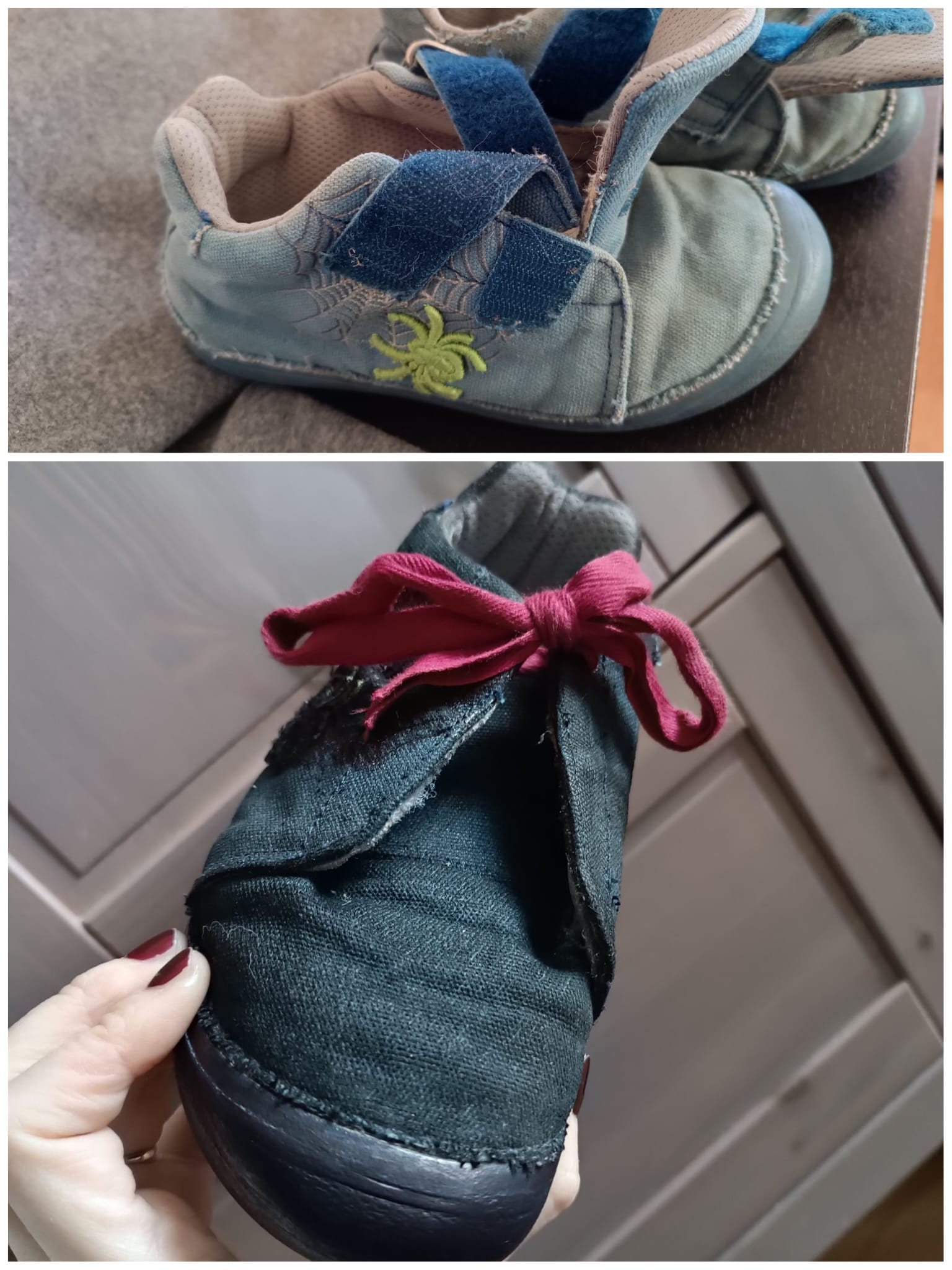
The latest experiment was transforming modern barefoot shoes into period shoes. I had long been motivated by a desire to provide children with suitable footwear for running on courtyard cobblestones and other hard surfaces. These are also warmer canvas shoes with waterproof rubber soles. Above is a photo of my son's worn-out sneakers, and below is the result.
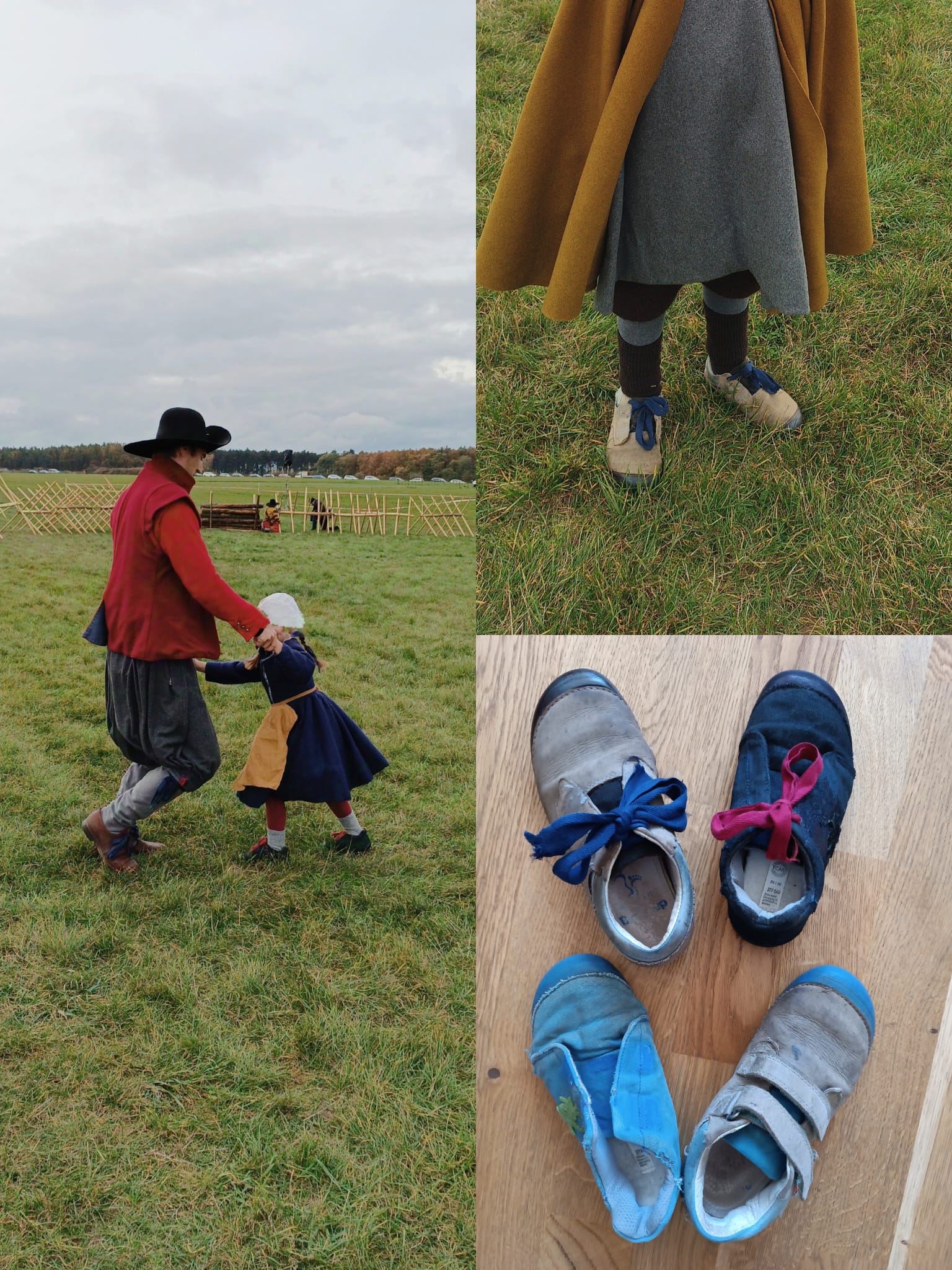
I also remade a pair of shoes for my son.
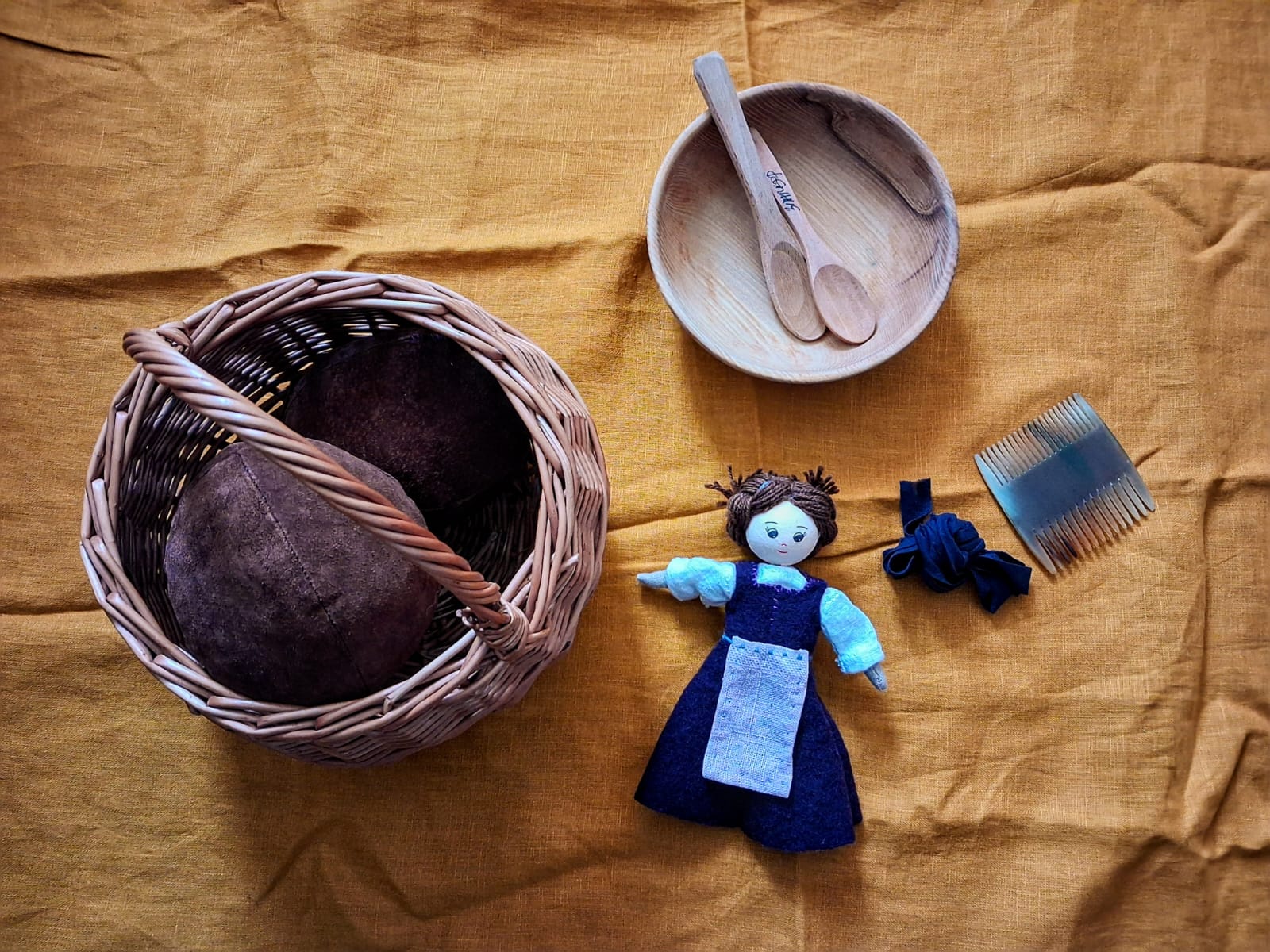
What else does a little reenacting girl need?
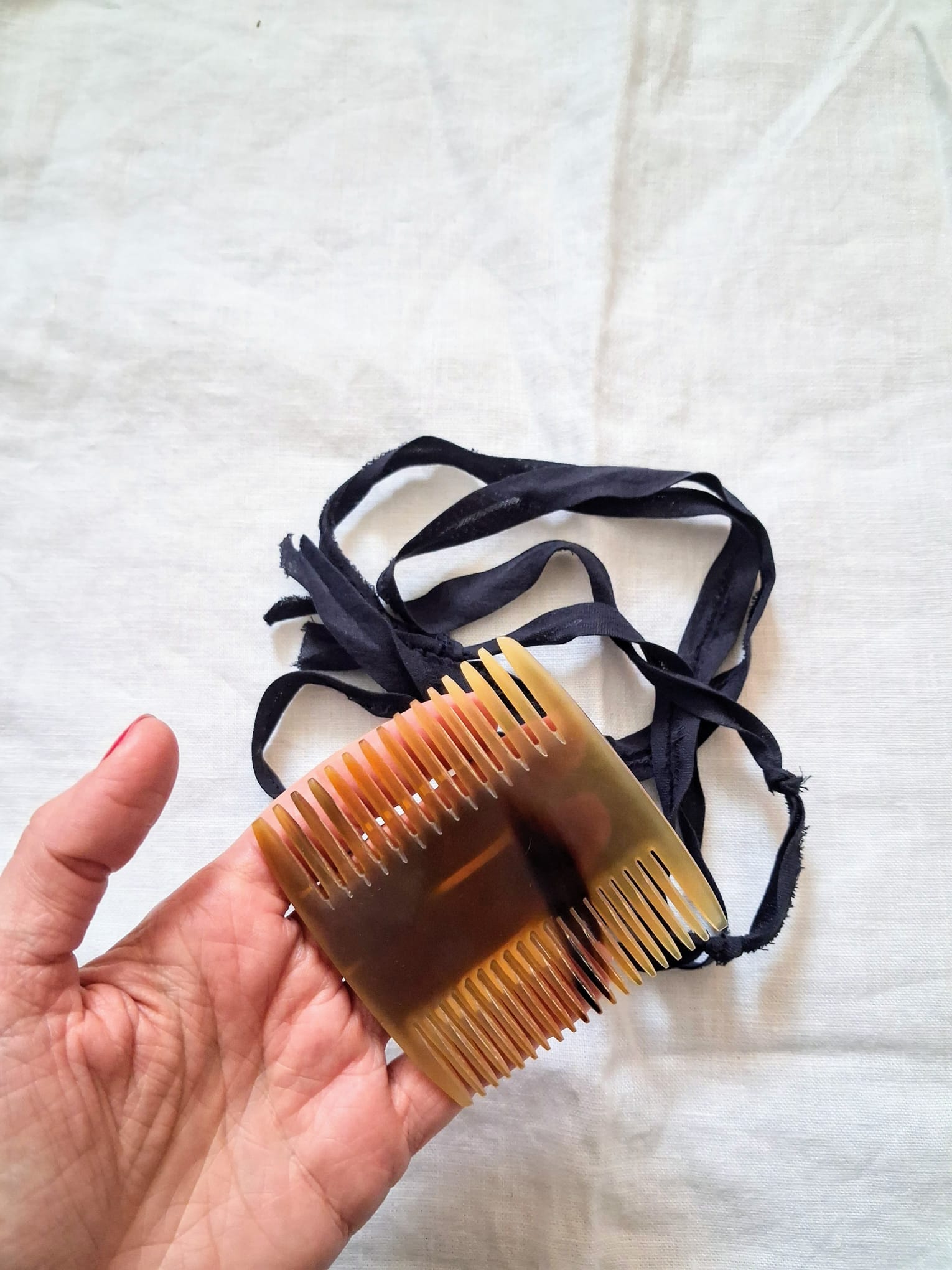
I bought the comb for myself, but in recent years I have used it more to comb my daughter's hair. According to historian Ruth Goodman, the denser side of this comb was used to comb dirt out of the hair (as a kind of ancient hair washing), and the sparser side was used for combing after the dirt had been combed out. (From the BBC program Tudor Monastery Farm.)
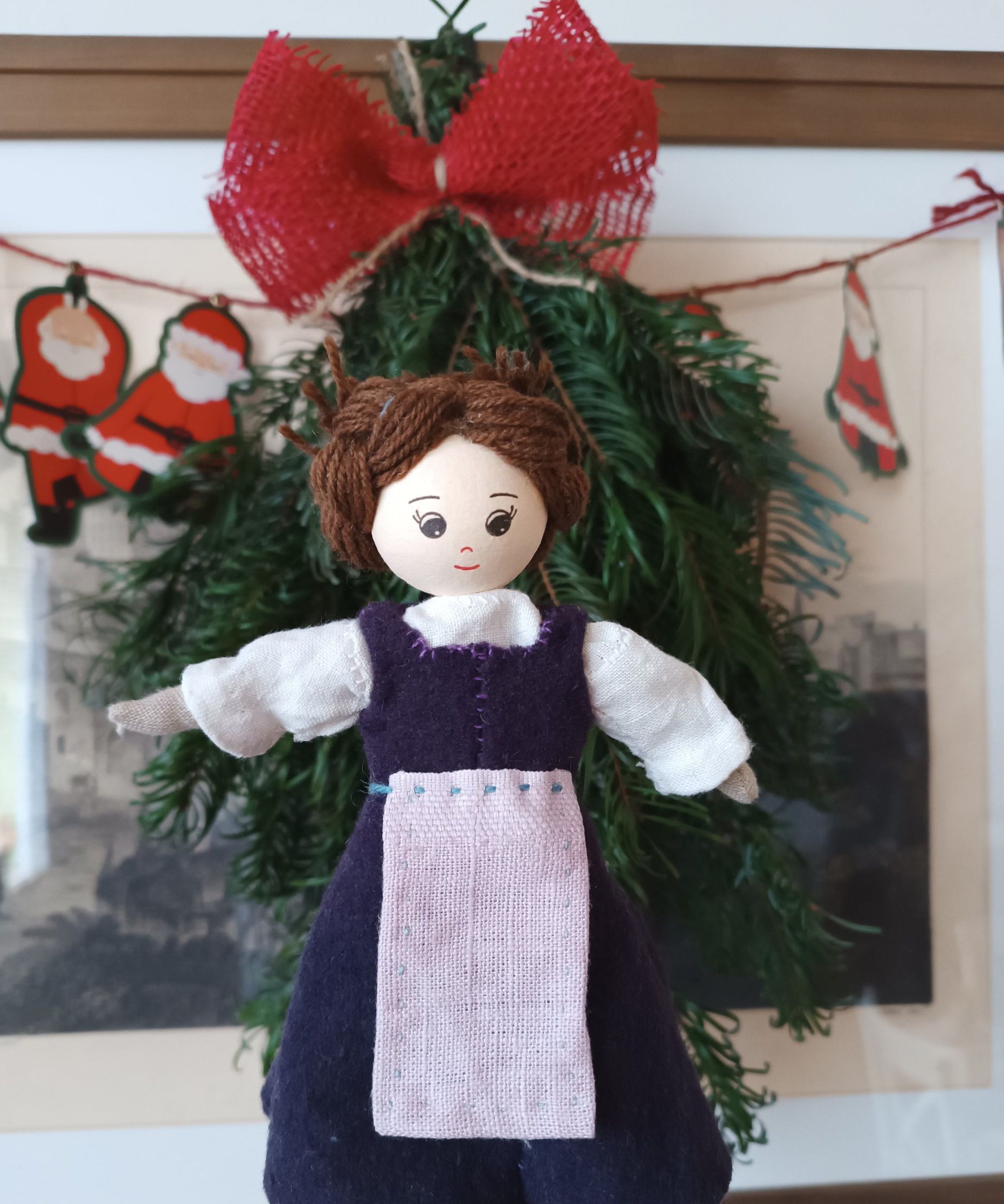
I will soon be writing instructions for this simple doll based on a historical pattern. The pattern also comes from the book The Tudor Child: Clothing and Culture 1485 to 1625.
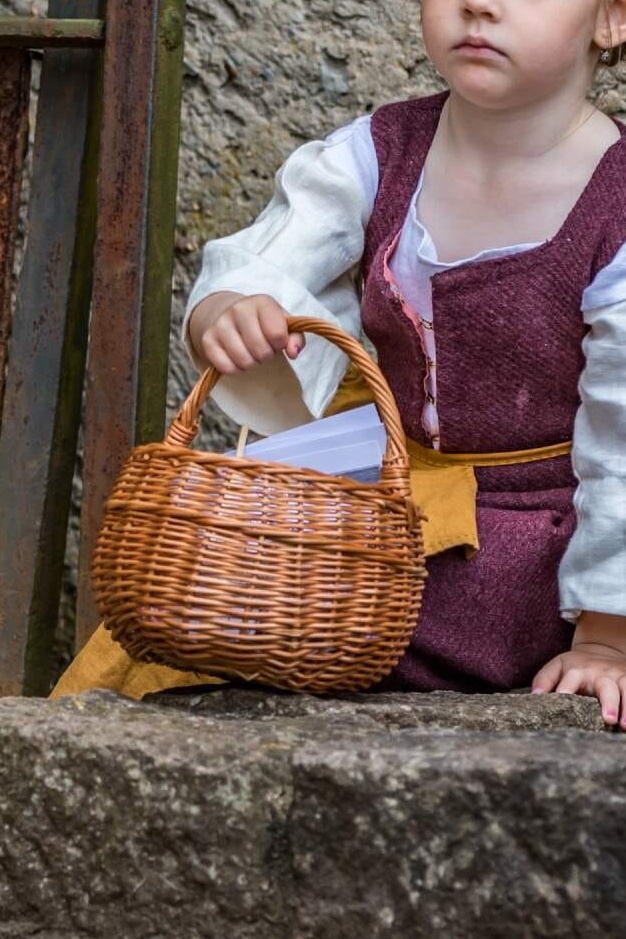
The basket is an integral part of the outfit. We usually bring it home with a collection of flowers from a historical event.
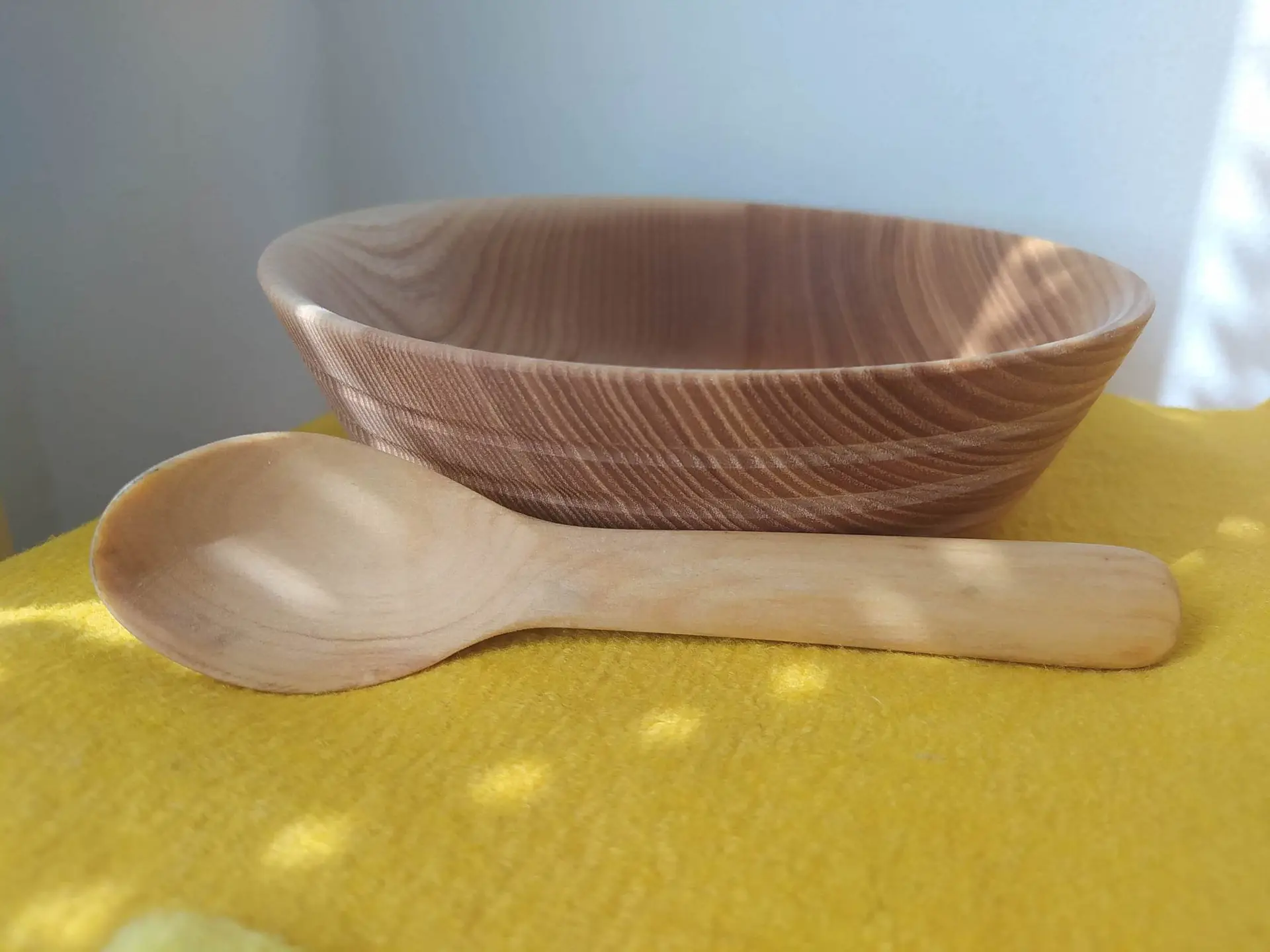
Children's tableware is a must. I don't have any mugs for the children yet, so they drink from their favorite sports bottles, which we keep in a linen bag. I would definitely like to get them some, as they like to drink from ours.
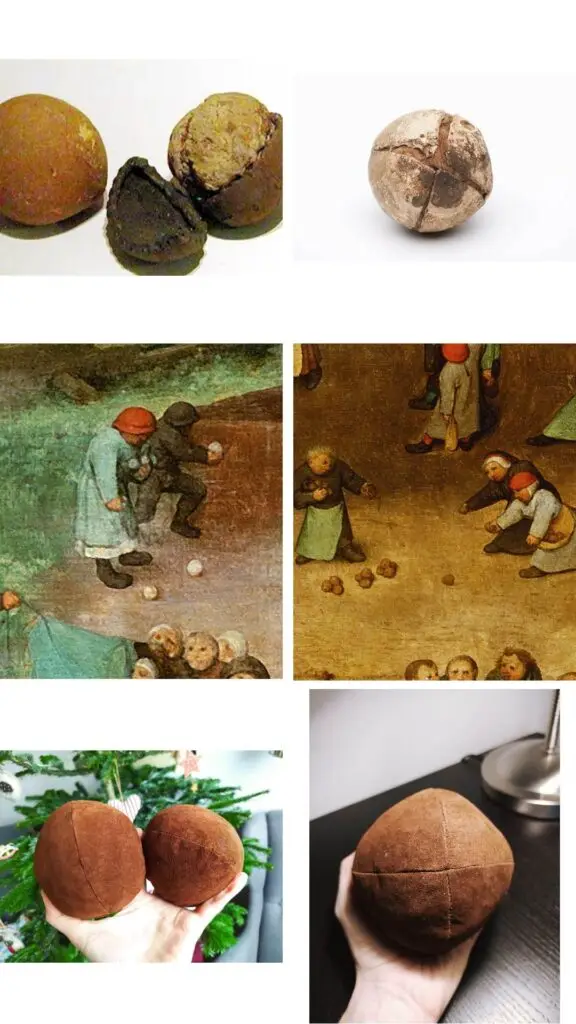
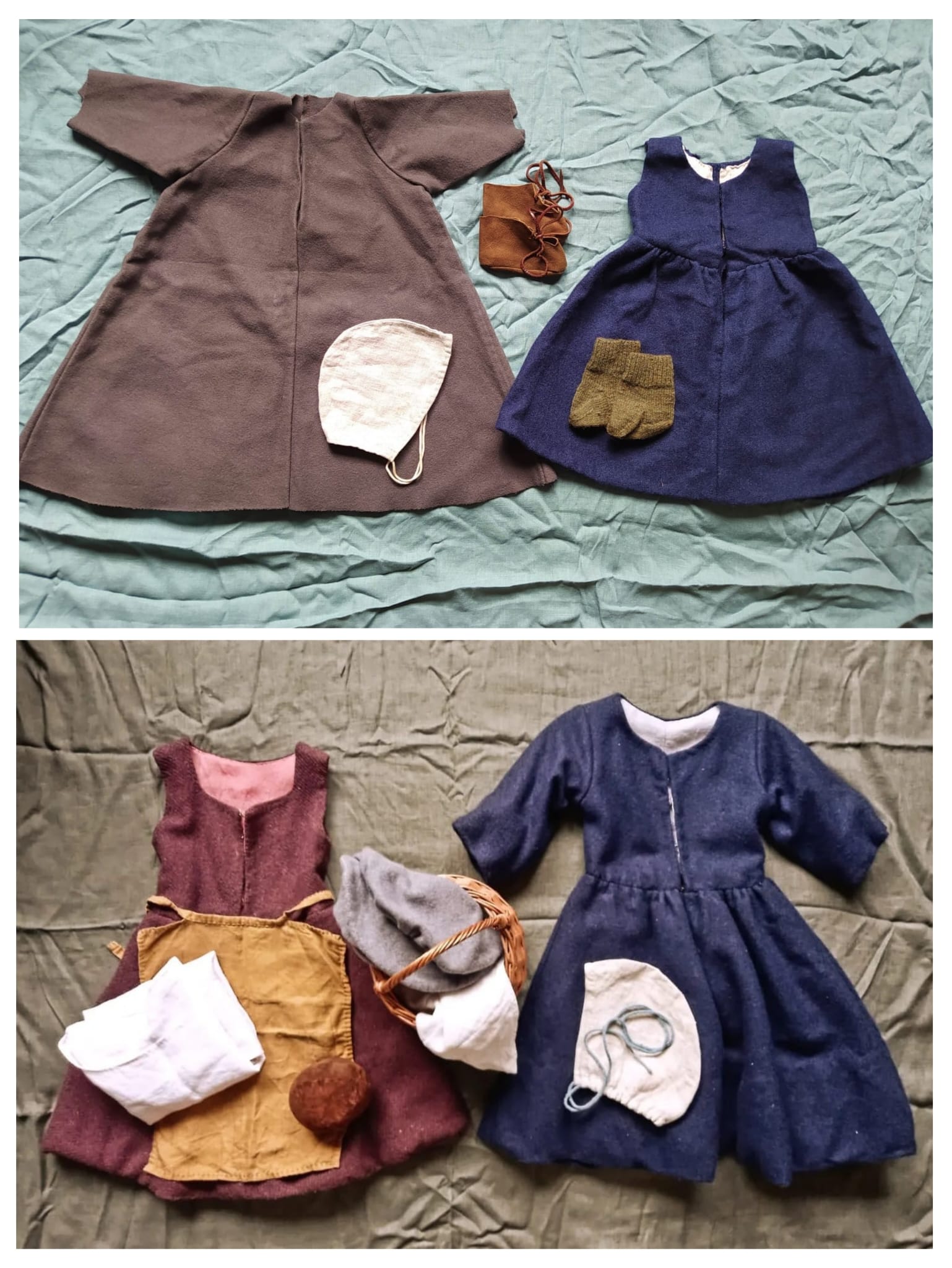
Our very first children's costume: a coat, dress/petticoat, wool socks, coif, and leather shoes. We loved wearing it, and it served two children very well. Now we have a new outfit for a girl. Just a reminder: I once described the sewing of the first children's (gender-neutral) outfit on my blog, including a detailed description of all its accessories.